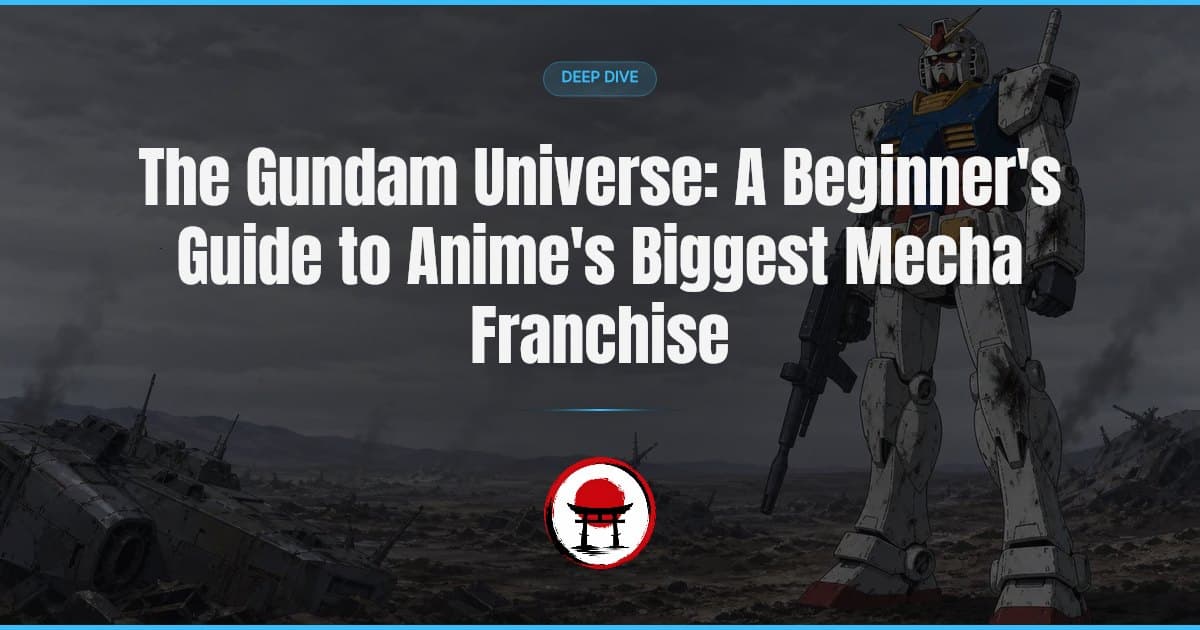
The Gundam Universe: A Beginner's Guide to Anime's Biggest Mecha Franchise
 By Mika Tanabe · Editor
Gundam has a reputation as one of anime's most intimidating franchises, mostly because people explain it badly. A newcomer hears about dozens of series spread across several timelines and assumes there is a huge backlog to clear before reaching the good material. There is no such requirement. Gundam is an anthology of war stories linked by a recognisable design language and a recurring argument. Most entries start over with a new setting because they were made for viewers who have not seen the others. Once you understand that, the useful question is no longer "where does the story begin?" It is "what sort of war story do I feel like watching?" The shape of the franchise is easier to grasp than its size suggests. You only need to find the entrance that suits you, while knowing why some longtime fans will still point you toward the original.
A Collection of War Stories Disguised as One Saga
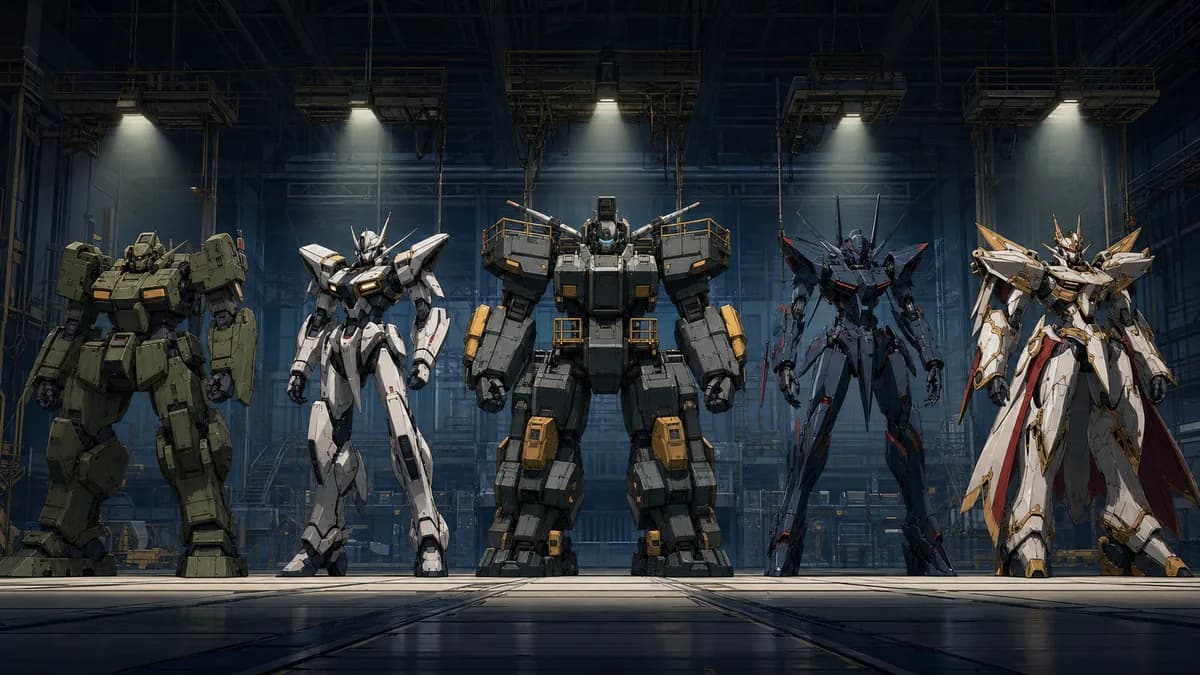
Gundam becomes much less daunting once you know that it uses two structures at the same time. The first is a continuous history called the Universal Century. It starts with the original Mobile Suit Gundam and continues through Mobile Suit Zeta Gundam, then reaches the entry that puts its antagonist's name in the title, Mobile Suit Gundam: Char's Counterattack. The lavish modern Mobile Suit Gundam Unicorn also carries that history forward. Those works really do build on what came before, and their returning ideas and characters reward watching them in sequence. Everything else is a reboot. Mobile Suit Gundam Wing creates its own century, war and cast. Mobile Suit Gundam SEED does the same, as do Mobile Suit Gundam 00, Mobile Suit Gundam: Iron-Blooded Orphans and Mobile Suit Gundam: The Witch from Mercury. None of them is a sequel to another Gundam series. Starting with any one of them does not mean skipping ahead, since its story has no earlier chapter to skip. A lot of people who say they could never get into Gundam were stopped by a shared universe that does not actually exist. What the franchise shares outside the Universal Century is a genre, not a single chain of events. That distinction removes most of the homework before you watch an episode.
The Idea Behind Every Gundam Series
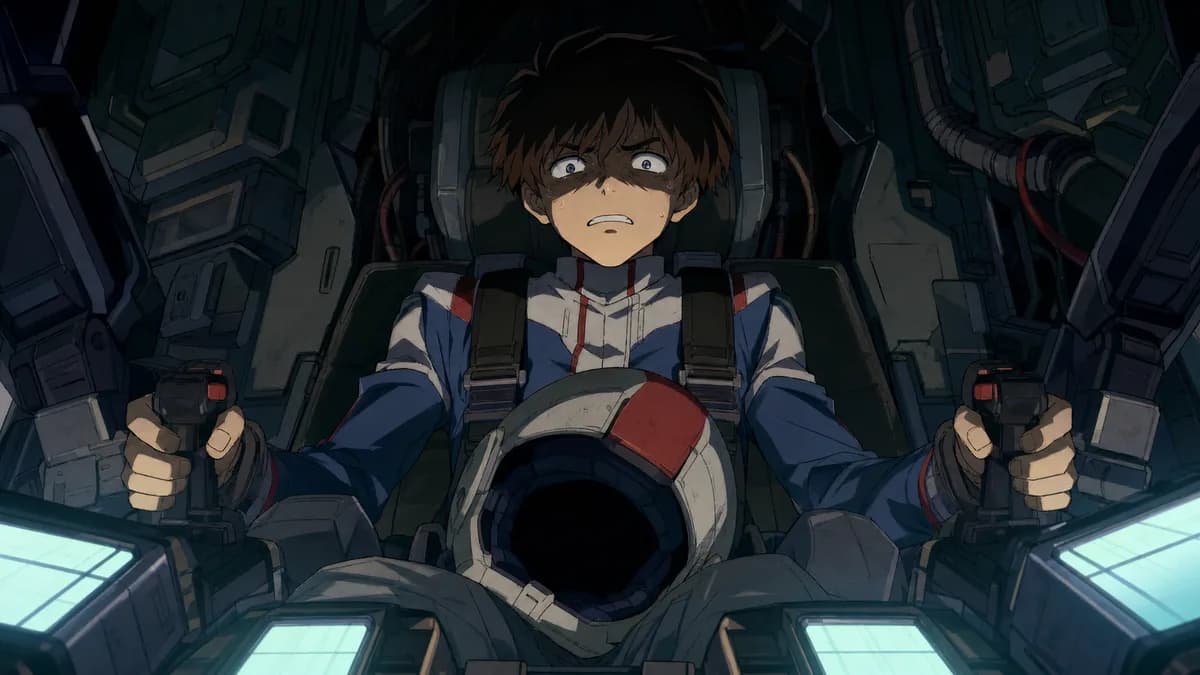
Continuity is not what holds these shows together. Their common thread is an argument about machines and the people ordered to use them. Gundam is where the real robot came from. Its giant suits are military hardware, not magic. Kunio Okawara's mechanical designs for the original resemble equipment that an army would have to maintain. They are mass-produced and scorched in battle. They depend on supply lines, spare parts and someone prepared to weld them back together before dawn. Compare that approach with the super-robot mode that still thrives in Gurren Lagann or Getter Robo Arc. In those shows, the machine expresses the pilot's willpower, and the scale of the drama rises with the volume of the pilot's shout. Gundam builds its drama from logistics and casualty lists instead. The other half of the argument concerns the person in the cockpit. The original puts a teenager inside the Earth Federation's prototype, then watches with patience and no mercy as the experience changes him. Coming of age and tragedy keep meeting in stories about children who are handed weapons. Every new continuity changes the flags and the names, but that emotional register stays. The hardware may sell the fantasy, yet Gundam keeps looking at the cost paid by the young person asked to operate it.
Choose Your First Gundam by Taste
Pick a Gundam the same way you would pick any other anime: start with the kind of story you already enjoy. Viewers drawn to Attack on Titan and Vinland Saga should go straight to Mobile Suit Gundam: Iron-Blooded Orphans. It is the entry most prepared to get genuinely ugly about war grinding down people who were far too young to consent to it, and about what soldiering costs them. If Code Geass won you over with ideologues and political chess, Mobile Suit Gundam 00 is the better match. It is built around doctrine, intervention and men who believe they can end war by waging it correctly. Anyone looking for a modern show that puts character first should try Mobile Suit Gundam: The Witch from Mercury. Its lead is easy to care about, and the series is the friendliest front door Gundam has ever made. It is also the one I recommend to people who have never watched any mecha series. Mobile Suit Gundam Wing offers a different flavour. This is the ensemble melodrama that caught an entire generation on late-night television, driven by charisma and manifesto. Mobile Suit Gundam SEED is the operatic choice. If its particular style works for you, SEED Destiny and SEED Freedom are waiting afterward. These are meaningful differences in mood and focus, so chronology is the least useful way to decide among them. None requires knowledge of the others.
Why Purists Tell You to Start at the Beginning
The strongest objection to this pick-by-taste advice should be taken seriously. A purist will tell you to begin with the original, otherwise you may spend the rest of the franchise reading footnotes. Their case becomes stronger the longer you remain interested in Gundam. Amuro Ray and Char Aznable created the template for the reluctant prodigy and the masked rival, a pairing anime has kept rewriting ever since. Neon Genesis Evangelion's broken pilot reads like an argument with Amuro rather than an idea invented without him. Yoshikazu Yasuhiko's faces and Kunio Okawara's silhouettes established the visual character of the franchise. The Zabi family, Degwin, Dozle and Kycilia, showed that the enemy could be a household full of internal politics instead of a monster waiting to be defeated. Lalah Sune matters just as much. Through her and the idea of a heightened, intuitive kind of human, the original introduced the metaphysical question that Gundam continues to circle. The Universal Century is also genuinely sequential. Mobile Suit Zeta Gundam and Mobile Suit Gundam: Char's Counterattack are continuations of the original story, not affectionate homages using familiar imagery. If you skip Mobile Suit Gundam, you can still follow later shows, but you are encountering translations of a book you never opened. The purist recommendation is based on real artistic history, not gatekeeping for its own sake.
Why the Original Is Still a Tough First Recommendation
I agree with the purists about the original's achievement, but not about when every newcomer should watch it. Mobile Suit Gundam is a masterpiece with a rough surface. Someone who is merely curious about Gundam may not yet have enough interest to see past that roughness. The show runs for a full television year instead of fitting into a tidy single cour, and the length is visible in its construction. During the middle stretch, it settles into suit-of-the-week skirmishing. Animation quality can swing sharply from one scene to the next. Its sound design and pacing come from a much older production culture, which can create distance for a viewer used to modern anime. Yoshiyuki Tomino made the series great within those constraints. He storyboarded much of it himself and even wrote the theme lyrics. Still, its best qualities unfold according to a schedule that assumes you already care enough to stay. There is also a shortcut that nobody mentions to beginners. The story was recut as a compilation trilogy: Mobile Suit Gundam I, II: Ai Senshi-hen and III: Meguriai Sora-hen. Those films deliver the same arc in a fraction of the sitting. They let a new viewer absorb the story and its place in anime history without first committing to the entire television run. The purist has the destination right. I just would not insist on the same order for everybody.
Where to Go After Your First Gundam
If the original works for you, the main Universal Century route opens in a straight line. Watch Mobile Suit Zeta Gundam next, followed by Mobile Suit Gundam: Char's Counterattack. Mobile Suit Gundam Unicorn is the modern, sumptuously animated return to that same history. Around that central route sit the side stories, which contain some of the franchise's most concentrated work. Gundam 0080, The 08th MS Team, Thunderbolt and 0083: Stardust Memory each focus on one small corner of the same conflict. More than one makes an even stronger case for Gundam's moral seriousness than the show it orbits. Mobile Suit Gundam: The Origin takes place earlier in the timeline, while GQuuuuuuX is the newest work carrying the Gundam name. If an alternate universe was what hooked you, there is less to plan. Finish that series and choose another self-contained continuity based on whatever you want next. You do not need to circle back immediately or earn permission to try a different version of the idea. For anyone ready to start with the original, it streams legally on Crunchyroll and Netflix. Gundam makes sense when treated as a genre with a dozen entrances, each offering its own cast and conflict. Once you stop treating it as a canon with only one acceptable starting point, the franchise's size no longer feels like a wall. It becomes an unusually large menu of war stories.
FAQ
No. Only the Universal Century entries form a continuous line: the original, Mobile Suit Zeta Gundam, Mobile Suit Gundam: Char's Counterattack and Mobile Suit Gundam Unicorn. Mobile Suit Gundam Wing, Mobile Suit Gundam SEED, Mobile Suit Gundam 00, Mobile Suit Gundam: Iron-Blooded Orphans and Mobile Suit Gundam: The Witch from Mercury belong to separate continuities with different casts and wars. Any of those can be your first Gundam without leaving you lost.