
The Anime Romcom Renaissance
 By Mika Tanabe · Editor
The old anime romantic comedy depended on a familiar trick: keep the romance from resolving. A confession would be interrupted, the childhood friend would survive for another arc, and the same group of possible partners would remain in place. The series stayed alive by withholding the event that everyone had come to see. The best romcoms airing now work differently. Some begin after the expected resolution, some reach it early, and others focus on what remains when a character has already lost. They are stronger because of that choice. This romcom renaissance did not begin with larger budgets or better punchlines. It began when writers realised that the consequences of a confession could be richer than the long wait for one. They then built stories that could keep moving after the answer arrived.
When Delay Was the Whole Design
The classic romcom was designed to avoid its own ending. Nisekoi is the clearest version of that design. It has a childhood promise, a locket and several girls with believable claims, all arranged in a structure that cannot settle on an answer without shutting itself down. Rent-a-Girlfriend uses a rental contract to power the same kind of engine. Neither series is incompetent. Both are extremely good at doing exactly what they set out to do, which is rationing progress. In an ongoing serial, a confession can feel terminal, so the writers have to keep finding ways for it to miss. Someone interrupts at the right second. A misunderstanding redirects the scene. A phone call arrives with flawless timing, or a transfer student appears just as the tension might finally break. Viewers accepted that bargain because the comedy provided an immediate reward while the romance stayed out of reach. Character growth paid the hidden price. Nobody could change for good, since lasting change would upset the roster and force the premise toward an ending. Every character had to go back on the shelf in roughly the same state as before. Modern romcoms broke that contract, and the genre became livelier once change stopped being treated as a threat.
The Romcoms Willing to Use Their Premises
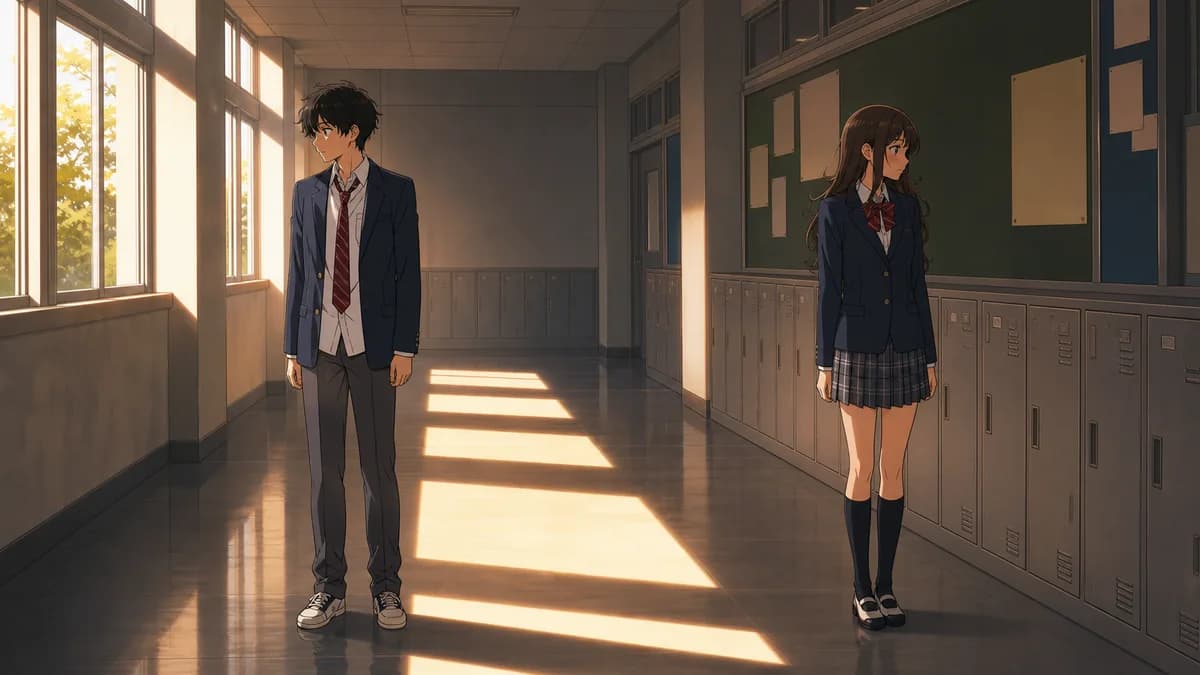
Toradora! marks the turn. Its leads change in ways that cannot be undone, and they say their choices out loud. The pain works because the story is willing to commit to what those choices mean. Horimiya pushes further. It brings the couple together early, then makes the relationship the material of the show. Chores matter. So do shared silences, family life and the small compromises involved in letting another person know you properly. Wotakoi starts with adults who are already dating and draws its comedy from the details of their lives instead of suspense about who will confess. Kaguya-sama: Love Is War finds an especially sharp solution. It takes romantic delay, makes it explicit and turns the pride of two people who cannot confess into open warfare. The series shares the joke with the audience instead of covering the delay with one contrivance after another. It also knows when to use what it has built. By Ultra Romantic, the rising conflict finally becomes real feeling rather than another reset. All of these series treat resolution as fuel for the next part of the story. The older model guarded resolution like a limited reserve that could only be released when cancellation was near.
Too Many Losing Heroines Starts After the Loss
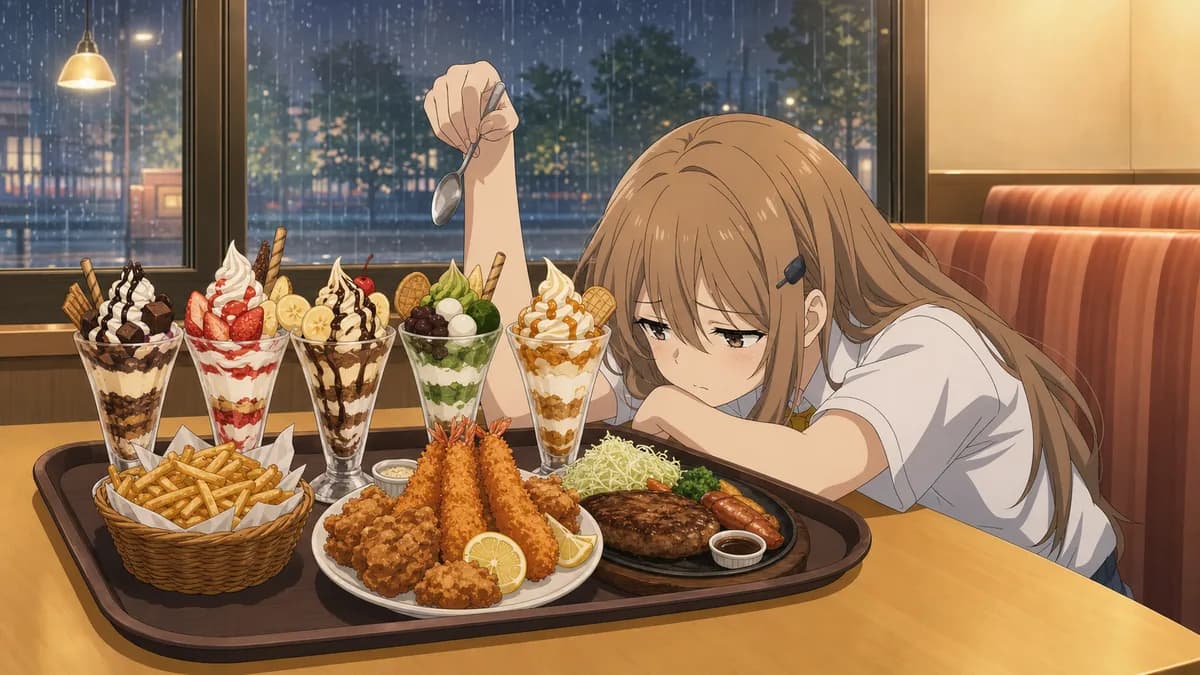
Every romcom creates losers by design. They are the girls the story chooses not to choose. Older entries in the genre tended to leave those characters frozen in place or quietly move them aside. Too Many Losing Heroines takes that discarded material and makes it the foundation of an entire show. Kazuhiko Nukumizu narrates from the position of a boy who sees himself as background scenery. The story begins with Anna Yanami's defeat instead of holding it for the finale. Lemon Yakishio and Chika Komari expand the focus until loss becomes something the whole ensemble shares. A-1 Pictures handles the animation, while Masahiro Yokotani is responsible for series composition and script. The light-novel source is easy to feel in the amount of work given to conversation. Its comedy is verbal, with riffs and club-room bickering doing much of the lifting. Food is another recurring source of humour, as is the show's awareness of the vocabulary fans use when sorting characters into familiar types. The comedy and sadness occupy the same scenes without cancelling each other out. Because the loss has already taken place, the writing has no reason to stall. It can pay attention to how people behave once the imagined happy ending belongs to somebody else. The series is a single cour on Crunchyroll, it scored the way romcoms rarely do, and a second season is coming.
The Writing Gave the Animation Something to Do
Production money often gets the credit for the romcom revival, but the cause runs in the opposite direction. Comedy depends on timing. A spoken joke may need a reaction held for one extra beat, precise face acting or a cut that arrives earlier than expected. A-1 Pictures storyboards a school romcom with the care of a showpiece. The studio behind Kaguya-sama: Love Is War brings the same instinct for comic staging to Too Many Losing Heroines, where an expression can land the gag instead of a conventional punchline. My Dress-Up Darling shows the principle most clearly. Its animation sells sincerity by presenting Marin's enthusiasm as genuine enthusiasm instead of treating it as an excuse to leer at her. That decision begins with direction, well before budget enters the discussion. The Dangers in My Heart relies almost completely on tiny changes in expression. Bocchi the Rock! demonstrated that a comedy-led production can support genuinely experimental visuals. Studios spend effort where a script gives that effort somewhere meaningful to land. When the storyboards have real emotional material to work with, the production treats the scene with the attention usually given to drama. Better craft did not rescue empty writing. Writing with consequences invited directors and animators to make each pause, look and cut count.
The Best Argument Against Calling It a Renaissance
There are two fair objections to the idea of a renaissance, and both deserve to be taken seriously. The first is nostalgia bias. Anime romcoms have always produced excellent series. Ouran High School Host Club was making sharp meta comedy generations of fandom ago. Clannad reached places that most modern romance will not attempt, while Kimi ni Todoke and Maid Sama! earned their popularity. Any comparison between the strongest current shows and an average selection from the past has been fixed in advance. The second objection is that deferral never disappeared. Rent-a-Girlfriend remains one of the most-watched romance titles going, and its story still runs on pure delay. The market continues to reward that approach generously. Both objections are right, but they do not overturn the larger change. The past was not weak, and stalling has not vanished. What changed was the default. Toradora! and Ouran were exceptions that had to work against the pull of their formats. Resolution-forward writing is now a mainstream commercial bet. Horimiya, Skip and Loafer, Blue Box, The Dangers in My Heart, Kowloon Generic Romance and Too Many Losing Heroines all make structurally different wagers. Every one of them was greenlit and made well. The renaissance is visible in what the industry now considers a viable starting point, not in a claim that older favourites have somehow lost their value.
Resolution Demands a Better Second Engine
Giving up deferral has a real cost. Once the original romantic tension has been spent, a show needs another source of movement, and finding one is difficult. Horimiya makes intimacy itself the subject. Wotakoi looks to the texture of adult life. Kaguya-sama keeps escalating until that escalation forces its characters to grow. Too Many Losing Heroines uses its ensemble as the new engine. When the audience is no longer keeping score over who will win, the series can devote its time to who these people are. That shift lets a romcom gradually become a coming-of-age story while keeping the shape and timing of a comedy. Bunny Girl Senpai brings in melancholy as a second register. Komi Can't Communicate uses social anxiety for the same structural purpose. This approach does not guarantee success. Some shows built around early resolution sag after their initial tension is gone, and that weakness is real. It is still a more interesting way to fail than endless preservation. A series that eventually runs out of things to say has at least used its ideas. That beats a series with one central statement that spends years refusing to make it. The modern romcom is willing to leave its characters changed by what happened. It does not need to keep them preserved for another identical round.
FAQ
Start with Kaguya-sama: Love Is War for the genre at its cleverest, or choose My Dress-Up Darling if warmth and sincerity sound better. Too Many Losing Heroines is the pick for the smartest recent use of romcom structure. Each one is funny in its own way, so your mood is a better guide than any ranking.