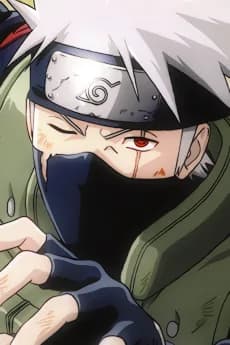
Kakashi Hatake
Naruto universe
Kakashi Hatake arrives with a reputation that seems to enter the room before he does. The Copy Ninja sounds like a promise of spectacle, yet the pleasure of watching him comes from how carefully he controls attention. A pause can feel like an assessment. A flicker of humor can release the tension without making the danger seem silly. Viewers expecting a nonstop demonstration of coolness may be surprised by how much his magnetism depends on restraint.
By Mika Tanabe
Appearance
Kakashi's screen presence is built around partial access. The framing and performance encourage you to study what he chooses to reveal, so even an apparently casual moment can carry a second possible reading. He rarely needs to demand the center of a scene. Instead, your eye keeps returning to him because his stillness suggests that he has noticed something the audience has not. That visual economy makes his bursts of movement land with unusual force.
Personality
Composure is Kakashi's default language, but it never settles into blankness. Kazuhiko Inoue gives the Japanese performance a relaxed surface with alertness underneath, while Dave Wittenberg brings a similarly dry, measured quality to the English version. The humor works because Kakashi does not appear to chase a laugh; it slips out as another way of managing the room. His reserve can feel reassuring in one scene and frustrating in another. That tension keeps his calm from becoming a single repeated note.
Kakashi Hatake’s Story
Spoiler-free introduction
The early story establishes Kakashi through reaction before explanation. Other people take his competence seriously, and the direction lets that expectation shape how you watch him. His choices often seem deliberate even when their reasoning is not immediately available. This makes him an effective source of suspense without requiring the series to turn him into a mystery box. You can understand the emotional function of a scene while still wondering how much he has already worked out. Early Kakashi is especially enjoyable when his casual manner brushes against a situation that plainly deserves attention. The contrast does not erase the stakes; it sharpens your curiosity about when he will decide to show his hand.
Spoilers beyond the early story
Later material asks the viewer to reconsider the effort inside Kakashi's composure. What first looked effortless begins to feel maintained, and his restraint gains emotional weight without losing its comic edge. The series is strongest with him when it allows past experience to affect the texture of a present choice rather than stopping for a tidy explanation. His famous competence then carries a cost: being able to read a situation does not guarantee an easy response to it. This shift rewards attention to his pauses and changes in tone. It also keeps later Kakashi connected to the quietly observant figure introduced at the beginning, instead of replacing him with a solemn version built only for heavier scenes.
Abilities
Kakashi's action scenes are satisfying because they treat observation as part of the fight. The excitement comes from watching him read pressure, adjust, and commit at the right instant. His reputation creates anticipation, but the direction does not need constant excess to justify it. Economy matters. A small response can tell you that the balance has changed before the scene makes that change obvious. This style gives his battles a tactical flavor and makes competence feel active rather than decorative. He appears to be thinking with the same precision that he moves, which is why even viewers who are usually impatient with invincible cool characters may find him engaging.
Watch Kakashi Hatake’s Story
Begin with Naruto (2002). It introduces the viewing rhythm that makes Kakashi work: first the impression of easy control, then the gradual realization that his attention is doing much of the dramatic labor. Starting there also lets the humor establish itself before later material asks different things of his reserve. The availability cards on this page show the legal services attached to each part of his story, so you can choose a listed option without searching through plot-heavy character pages.
Start here: Naruto (2002) — on Crunchyroll, Hoopla, Hulu, Netflix, Tubi TV
- NarutoMain · 2002Crunchyroll, Hoopla, Hulu, Netflix, Tubi TV
- Naruto ShippudenMain · 2007Crunchyroll, Hulu, Netflix
- Boruto: Naruto Next GenerationsSupporting · 2017Crunchyroll, Hulu, Netflix
Questions
- Who voices Kakashi Hatake in English?
- Dave Wittenberg voices Kakashi Hatake in English. His measured delivery preserves the character's dry humor while keeping the calmer scenes attentive rather than sleepy.
- Who voices Kakashi Hatake in Japanese?
- Kazuhiko Inoue voices Kakashi Hatake in Japanese. He makes small shifts in pace do substantial work, particularly when a relaxed line carries an undercurrent of judgment.
- When does Kakashi Hatake first appear?
- For a first watch, start with Naruto (2002). It gives Kakashi's manner and reputation room to register before the later story adds extra weight to them.
- Where can I legally watch Kakashi Hatake?
- Use the availability cards on this page for the legal streaming choices tied to his appearances. Start with the card for Naruto (2002), then continue in the order shown.
- Is Kakashi Hatake worth watching for?
- Yes, especially if you enjoy action characters whose intelligence is visible in timing rather than speeches. Kakashi can change the pressure of a scene while seeming almost casual, and the later emotional shading makes those early choices rewarding to revisit.