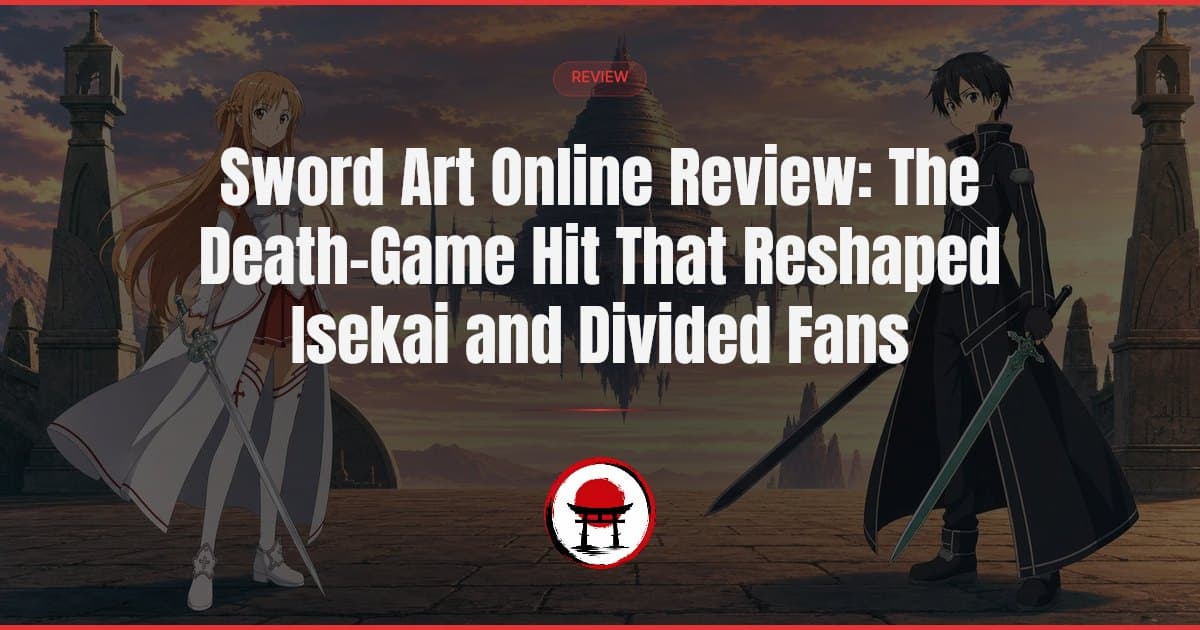
Sword Art Online Review: The Death-Game Hit That Reshaped Isekai and Divided Fans
 By Mika Tanabe · Editor
Few anime have defined a decade quite like Sword Art Online, and even fewer can start an argument so quickly. A-1 Pictures adapted the hit light novels around a brutally effective hook: players are trapped in a virtual MMO, and death in the game kills them in real life. That premise turned the series into a cultural juggernaut and helped pull isekai out of its niche until the genre seemed to be everywhere. When Sword Art Online is good, it moves with confidence and delivers real excitement. Its best episodes still have bite. The trouble is that its quality swings wildly. The series puts most of its strongest material up front, drifts further into wish fulfillment as it goes, and eventually pushes aside the heroine who gave its early story so much heart. Enjoying the show while resenting its choices is a perfectly normal response. Sword Art Online is too influential and entertaining to dismiss, but too compromised to defend without a long list of qualifications.
The Story and Its Killer Premise
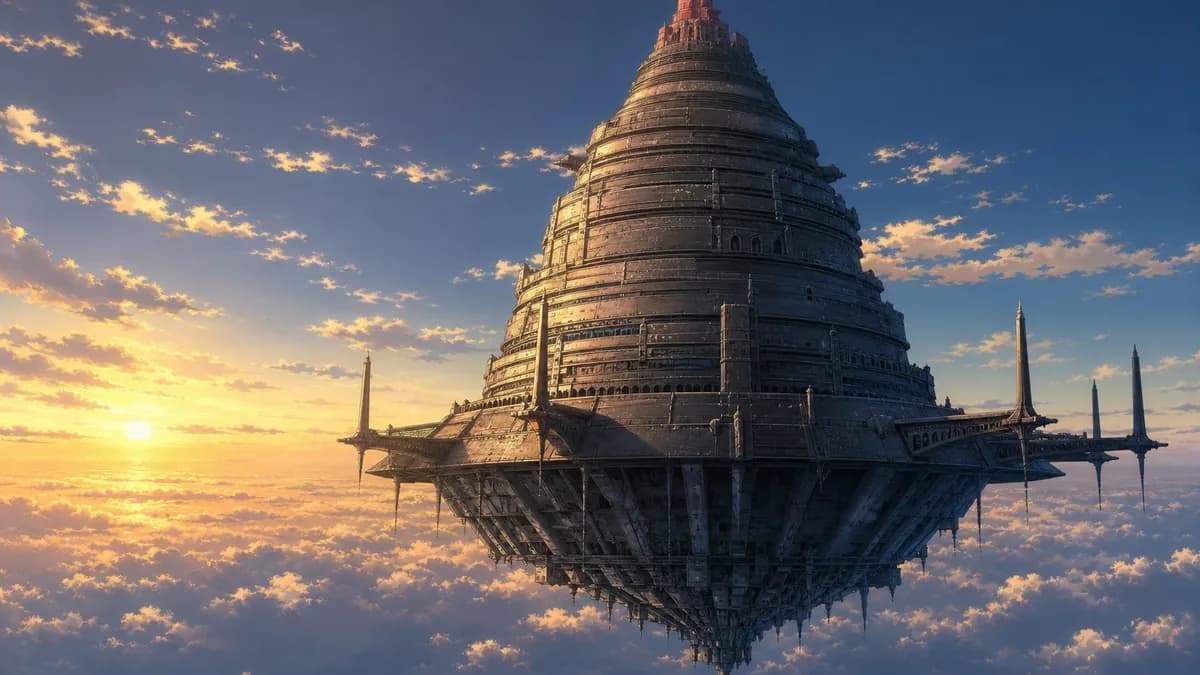
The premise is pulp storytelling at its sharpest. In the near future, a virtual-reality headset allows players to control avatars with their own bodies and enter a vast online world. That world is Aincrad, a towering floating castle with one hundred floors. Once everyone is inside, the exit option vanishes. The game's architect has locked the players in and explains the only route home: they must clear all one hundred floors. Death in the game means death in real life. If somebody outside removes a player's headset, that player also dies for real. A fantasy playground becomes a prison in an instant, with swords as the only available route to freedom. The opening arc understands exactly how much tension that setup can generate. It follows solo swordsman Kirito while the trapped population slowly and grimly learns that this game now has life-or-death consequences. The most convincing material comes from ordinary details rather than constant combat. Survivors carry guilt over people they could not save. Guilds develop their own politics. Players cook, marry, and mourn while living inside the machine built to kill them. Some stop treating Aincrad as a temporary challenge and make a daily life there because daily life is still necessary. Those choices give the setup real thematic force. For a long stretch, the series gives its fear and grief enough room to matter. The strange domestic routines matter too. Even when the story compresses events, Aincrad feels like a place whose inhabitants have learned to survive rather than a collection of levels waiting for the hero to clear them. That tension between home and death trap is what makes the first arc so hard to forget.
Kirito, Asuna, and the Cast Around Them
Kirito, whose offline name is Kazuto Kirigaya, embodies both the appeal of Sword Art Online and the flaws that wear it down. Early in the story, he works as a lonely and burdened lead. Other players shun him as a 'beater,' and he carries genuine guilt for the people he failed to save. His skill isolates him as often as it helps him. As the series continues, however, that character gives way to a much simpler wish-fulfillment fantasy. Kirito becomes a near-invincible hero who out-levels every threat, while admirers gather around him with the regularity of loot drops. Vulnerability made him interesting, so losing it leaves the character with less room to surprise us. Asuna Yuuki is stronger writing. Known as the 'Lightning Flash,' she is a fierce and capable duelist who can meet Kirito as an equal. Their clashes and growing affection supply the emotional center of the first half. The romance between them is the best relationship the show creates, which makes Asuna's later treatment especially maddening. The supporting players are easy to like but rarely receive enough material. Klein, Agil, and Lisbeth bring warmth whenever they appear, yet the story seldom lets them become much beyond welcome company. Suguha, Kirito's cousin, carries a subplot that many viewers find genuinely uncomfortable. She receives plenty of emotional attention, but the nature of that material does the character no favors. The cast therefore rests on one excellent pairing, surrounded by characters who suggest possibilities the series does not fully use. Kirito and Asuna prove how effective Sword Art Online can be when affection grows alongside trust in each other's strength. Everyone around them makes the missed potential easier to see.
Animation, Action, and Music
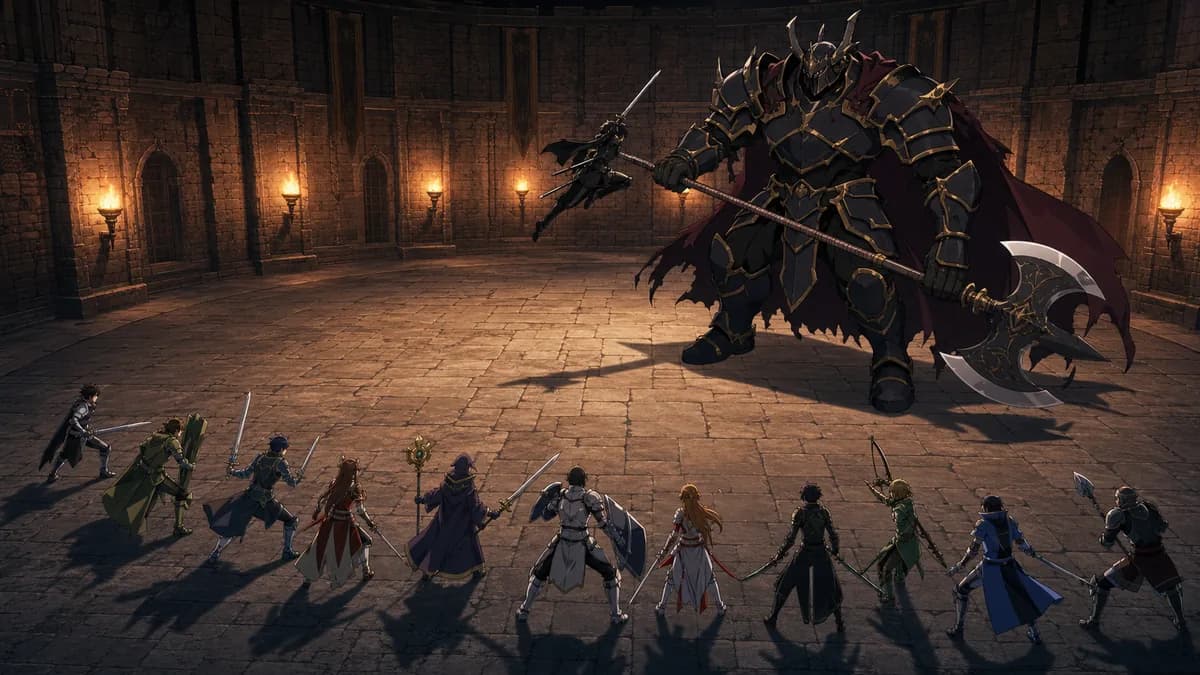
Sword Art Online is far steadier in its craft than in its writing. A-1 Pictures presents Aincrad with a bright fantasy finish that still feels physical. The castle vistas have scale, and the character designs stay clean. Its duels are staged so that the movement remains easy to follow. The sword fights value speed and clarity rather than grit. Skills flash across the screen, and attacks are called aloud, but the action rarely becomes visual clutter. When the direction gives a major encounter the time it needs, the boss fights arrive with real weight. They feel dangerous because the production remembers what a lost health bar means in this world. Composer Yuki Kajiura is the production's standout contributor. Her score carries a huge share of the emotion, using choral swells to lift victories and aching strings to sit with the losses. The unmistakable grandeur of Kajiura's music can make an average scene feel epic without pretending the scene is better written than it is. Her work binds the series together and repeatedly gives the material a lift. The opening and ending themes are memorable earworms in their own right. Sound design also sells Aincrad's peculiar status as both a game and a lived existence. Menus and effects belong to a digital system, while the people responding to them treat every noise as part of reality. That balance helps the virtual world feel immediate. The script may stumble, but the series nearly always looks and sounds like a blockbuster. Its polished presentation is a major reason it reached viewers far beyond the audience already following this kind of story.
Its Ideas and Its Lasting Influence
Sword Art Online matters far beyond the quality of any single arc. It did not invent the idea of being trapped in a game. What it did was package that fantasy with remarkable efficiency: an ordinary teenager becomes an all-powerful hero inside a world governed by rules that can be measured. That formula effectively became the template for the isekai wave that followed. Many later game-world anime respond to it in some fashion, including cozier riffs such as Log Horizon and darker power fantasies. Its reach is one reason the series cannot be judged only as a self-contained adventure. The better reason is that its strongest material has something to say. Sword Art Online considers what living inside a system does to a person. It treats virtual relationships as bonds that might be every bit as real as physical ones, and it asks whether time spent living in a game still counts as a life. The death-game premise also puts grief and identity under pressure because the players' bodies are elsewhere while every choice inside Aincrad carries real consequences. The best stretches take those questions seriously and allow the characters' behavior to supply answers. Consistency remains the problem. The series repeatedly reaches toward substantial ideas, only to retreat into romance or spectacle when those ideas become difficult. Its ambition and influence ultimately separate it from the crowd more reliably than its execution does. Sword Art Online aims high and reaches some of those targets. Even where it falls short, the shape of that ambition cast a long shadow over the genre that followed it.
Where It Excels and Where It Falls Apart
The strengths deserve full credit. Sword Art Online has a killer hook and a gorgeous production, while Kajiura's score makes its biggest moments hit harder. The opening arc compresses a great deal of material, but it still delivers some of the most memorable highs in mainstream anime. The trouble arrives in the second half. Fairy Dance exchanges the pressure of the death game for a limp rescue story set in a fairy world, giving the series' weakest instincts room to take over. Asuna had been Kirito's confident equal during the opening. Here she becomes a literal prisoner in a cage, waiting for him to save her. Reducing the show's best character to that role is dispiriting, especially after the first half spent so much time establishing her strength and agency. The new villain plays like a cartoon rather than a credible threat. The story also leans heavily on a creepy and uncomfortable subplot. Kirito's power fantasy has by this stage moved completely into deus-ex-machina territory, leaving little reason to believe that anything can genuinely threaten him. The supporting heroines have a related problem because they tend to orbit Kirito instead of existing for themselves. These choices explain why the charge of 'overrated' has followed the series so persistently. They are not small blemishes on an otherwise consistent show. They expose a gap between the story Sword Art Online is capable of telling and the easier one it often chooses. Its early episodes build danger through loss and uncertainty, then later material weakens both by treating the hero as effectively untouchable. That contrast tells the whole story of Sword Art Online. Its best qualities are vivid enough to create devoted fans, and its failures are prominent enough to make the criticism entirely understandable.
The Verdict
Sword Art Online earns its 7.8, including the asterisk attached to that score. It is an important series and often a thrilling one. The lavish production keeps it immediately watchable, the central hook has lost none of its force, and Yuki Kajiura's music is a treasure. The Aincrad opening arc alone gives viewers a strong reason to try it. None of that erases how uneven the full experience becomes. The second half mishandles its best character, Kirito grows less interesting as his vulnerability disappears, and the writing too often picks spectacle instead of following through on the ideas it introduces. A rating based only on the peaks would be higher. A rating based on consistency would fall lower. The 7.8 score is an honest meeting point between those reactions. Watch Sword Art Online because it is entertaining and because its success changed the direction of anime around it. Expect frustration along with the excitement. The show can produce a gripping fantasy one moment and undermine its own strengths soon afterward, and any fair review has to account for both sides.
FAQ
Yes, as long as you know what sort of ride you are starting. Sword Art Online is a genuine landmark, and much of it is great fun. The opening Aincrad arc is strong enough to justify watching by itself. Quality drops sharply in the second half, so its importance comes from its influence and its best material rather than anything close to flawlessness.