That Time I Got Reincarnated as a Slime Review: A Cozy Power Fantasy Built Around Friendship and Nation Building
 By Mika Tanabe · Editor
Most isekai begin by giving a hero a sword. That Time I Got Reincarnated as a Slime begins with a lonely thirty-seven-year-old office worker bleeding out on a Tokyo street, then waking in a fantasy world as a slime. The show takes one of the genre's favorite daydreams, in which someone is reborn stronger, smarter, and finally wanted, and gives it the least heroic body possible. Its best decision is to move beyond the pursuit of power so quickly. Rimuru, previously known as Satoru Mikami, has no grand plan to conquer this new world. He meets isolated monsters, learns their names, and ends up founding a country almost by accident. The pleasure comes from seeing those relationships accumulate and the settlement grow around them. Warm, funny, and extremely likable, this is comfort viewing with very little interest in putting its hero in lasting danger.
The Story and Its Setup
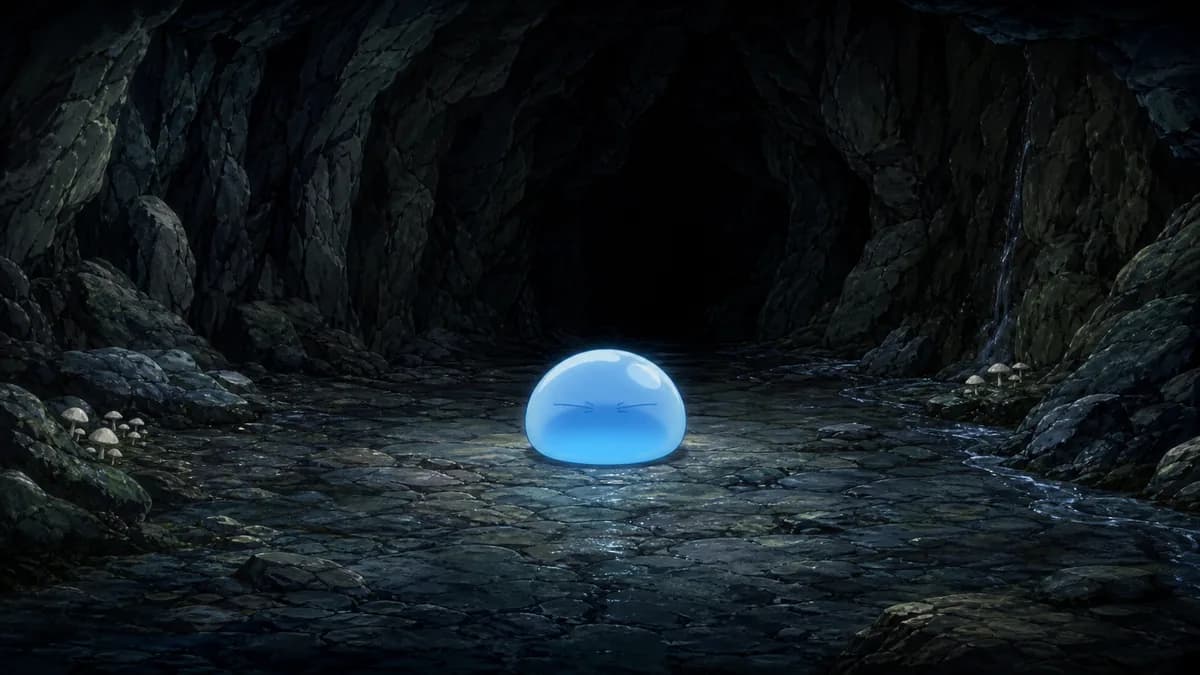
The opening delivers exactly the sort of premise isekai fans enjoy, then takes it in a less obvious direction. Satoru Mikami is thirty-seven, stuck in a dead-end job, and stabbed to death in the street. He wakes in a fantasy world as a slime, about as humble a creature as he could have become. He does not spend long feeling sorry for himself. He starts absorbing whatever he finds. Predator, one of his new skills, allows him to devour and copy almost anything. Meanwhile, a dry inner voice called the Great Sage studies his surroundings and explains them with the precision of a game walkthrough. His first proper friend is a titanic Storm Dragon who has been sealed inside a cave for centuries. Rimuru gives the dragon the name Veldora. Naming matters in this world because it evolves and empowers monsters, and that simple gesture drives much of what follows. Rimuru later finds a beleaguered goblin village and a pack of direwolves. He saves both groups, names their members, and begins gathering the population of a monster nation without really planning to do so. The series soon finds its regular pattern. Rimuru encounters a new species, handles the crisis facing it, welcomes it into the growing settlement of Tempest, then turns his attention to roads, alliances, and whatever the community needs next. The process repeats, but the friendly cast and visible growth of the town keep it satisfying. Calling the show a conventional adventure misses its particular appeal. It plays much like a fantasy town-management simulation whose systems happen to be powered by friendship.
Rimuru and the People Around Him
Rimuru Tempest makes the whole series work. Reborn as a genderless slime, Rimuru later adopts a slight, androgynous humanoid form. The character's appeal comes from competence and decency instead of swagger. There is still a middle manager's soul inside that demigod's body, and it shows in the way Rimuru handles every new dispute. He listens to frightened monsters, gives them names and homes, treats them with dignity, and gradually becomes the person they all depend upon. The supporting cast is huge and easy to like. Veldora is a goofy, manga-obsessed dragon. The ogre siblings include the devoted Benimaru and the gentle Shuna, while the fiercely loyal Shion turns her terrible cooking into a recurring joke that feels like a war crime. Rigurd remains an ever-earnest goblin elder, and Ranga is a direwolf who adores Rimuru with all the enthusiasm of an enormous puppy. Their shared home gives the series one of isekai's coziest found families. There is a limitation to this arrangement. A lot of Rimuru's retainers are characterized mainly through their devotion to Rimuru, so some of them eventually blend into a crowd of loyal faces. The show keeps its main relationships distinct enough to matter, though, and the Great Sage's flat delivery works as a perfectly judged comic counterweight to Rimuru. Even when the cast becomes crowded, Rimuru holds the center with ease and gives everyone else a convincing reason to stay there.
Animation, Design, and Sound
Eight Bit gives the series an attractive comfort-food look instead of chasing spectacle in every scene. Tempest feels bright, clean, and genuinely pleasant to visit. Its lush forests lead into cobbled monster-town streets, with watercolor-tinged backgrounds helping the whole place feel welcoming. The slime is the production's great visual success. Rimuru's small blue body squashes and stretches expressively, and that simple blob often shows more personality than fully drawn lead characters in other series. Comic reactions have plenty of elasticity, and the animators understand that charm is their most reliable asset. The action is less consistent. Major clashes, including Veldora's storms and the mid-season monster-lord catastrophe, carry real force. Larger battles often turn to CG hordes, however, and those crowds get the job done without producing much excitement of their own. This was never designed as a sakuga showcase, nor does its appeal depend on becoming one. Ryouma Ebata's character designs remain appealing, clear, and easy to identify even as the cast expands. Elements Garden provides a score that supports the show's warm sense of adventure, with veteran sound director Jin Aketagawa guiding the audio production. Takuma Terashima performs an opening theme that sticks in the head, while the series changes its ending themes to add some variety. The English dub has also earned a solid and widely liked reputation. New viewers can choose subtitles or the dub without feeling that they have settled for a notably weaker version.
Why Its Nation Building Feels Different
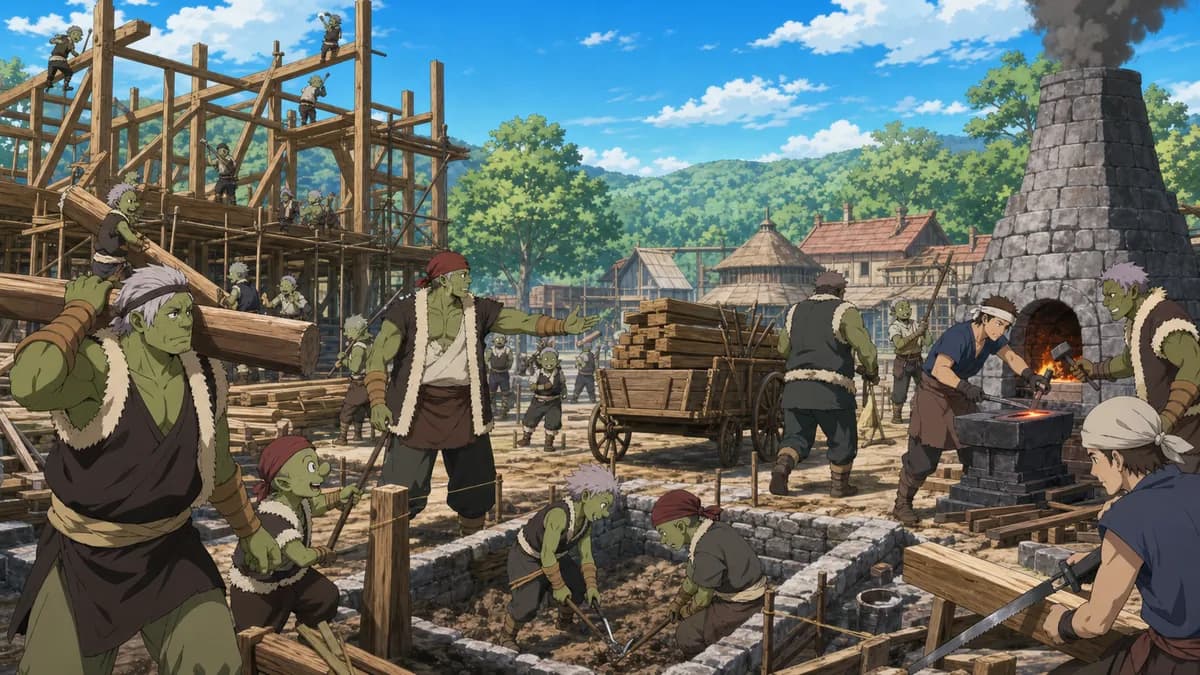
Once the slime gimmick becomes familiar, the show's real distinction is its interest in running a kingdom. This is much closer to a kingdom-management fantasy than a hero's journey. Many isekai series focus on dungeon loot or strength measured like a position on a leaderboard. TenSura keeps returning to governance, including diplomacy and infrastructure, along with trade and the complicated work required to help different peoples live beside one another. Creatures commonly treated as faceless enemies receive a different role here. Goblins, ogres, orcs, and direwolves are presented as persecuted communities. Rimuru gives them names and jobs, then offers them a place in the decisions shaping their home. That choice connects directly to the show's strongest theme: belonging. Satoru died as a lonely man with nobody to mourn him. His new life places him in a world that suddenly and desperately needs what he can offer. The resulting story embraces second chances and found family without embarrassment. Much of its comfort comes from competence. There is a quiet pleasure in watching a capable and considerate person fix a problem, then leave the people around him in a better position. Isekai power fantasies are often criticized for feeling hollow because all their rewards flow toward the protagonist. This one directs the fantasy outward. Rimuru's strength still drives events, but the emotional reward comes from watching an entire community flourish rather than seeing a single champion collect another victory.
What Works and What Holds It Back
The show's central trade-off is easy to identify. Its warmth, inviting worldbuilding, and remarkably likable lead make it the sort of comfort series you can sink into after a long day. The design that makes it so soothing also removes a great deal of tension. Rimuru begins the story staggeringly overpowered and keeps getting stronger. Real jeopardy seldom lasts. A threat appears, looks dangerous for a scene, and is usually dismantled with brisk efficiency. The suspense rarely comes from wondering whether Rimuru can solve a problem because the answer is almost always obvious. The fun lies in watching how he solves it and what Tempest gains afterward. That works when the character interactions are lively, but it cannot keep every stretch moving. The nation-building pattern brings plenty of slow administrative material with it, including introductions and negotiations, as well as infrastructure montages in which the plot barely advances. New faces also arrive more quickly than the series can develop them, adding to the sense that some members of Rimuru's following are interchangeable. A handful of fan-service scenes and harem-adjacent jokes feel attached to the show instead of growing naturally from it. Patience helps because this is deliberately a slow burn, and much of its best and largest-scale material arguably comes after this first run. Viewers seeking danger and suspense should look elsewhere. Anyone in the mood for gentle, feel-good competence will probably find that these weaknesses do little to spoil the experience.
The Verdict
That Time I Got Reincarnated as a Slime is close to an ideal comfort isekai. It offers a warm and funny place to spend time, led by an overwhelmingly powerful slime and filled with the misfits who become his nation. Danger rarely grips the story, and the pacing sometimes wanders, but the series is built to let viewers relax into it rather than keep them anxious. Rimuru ranks among the genre's most genuinely likable protagonists. The found-family relationships around him are heartfelt without turning sugary, and the steady growth of Tempest gives even quiet episodes a source of satisfaction. Our score of 84 reflects a show that understands its own appeal and delivers it extremely well. It is cozy, feel-good, and easy to rewatch. An almost complete lack of stakes, along with a few slow stretches, keeps it one step below the best anime in the medium. Viewers who want comfort food with a kingdom built into it should begin here. The story only grows from this foundation.
FAQ
Yes, particularly for viewers who prefer cozy and good-natured fantasy to white-knuckle drama. The show pairs one of isekai's most likable protagonists with an appealing monster nation and a warm found-family story, which makes it very easy to binge. Expect relaxed comfort viewing and gentle wish fulfillment. Constant peril and high tension are not what it wants to provide.