Nana Review: An Adult Drama That Hurts in All the Right Ways
 By Mika Tanabe · Editor
Nana does not fade when the credits roll. It stays with you because Ai Yazawa understands how love can sustain a person while also making a mess of their life. Her landmark josei story follows two women who meet by chance on a train to Tokyo, learn that they have the same first name, and eventually share the now iconic apartment 707. Nana Osaki is a fierce punk vocalist determined to make it onstage. Nana Komatsu is a soft-hearted dreamer who believes love will give her the life she wants. Madhouse takes that simple collision and builds an unusually candid adult drama around ambition and codependence, especially the quiet ways people fail those closest to them. This is one of the most emotionally honest series anime has produced. It treats people in their twenties as complicated adults instead of punchlines, and it knows exactly how much their choices are going to hurt.
Story and Premise
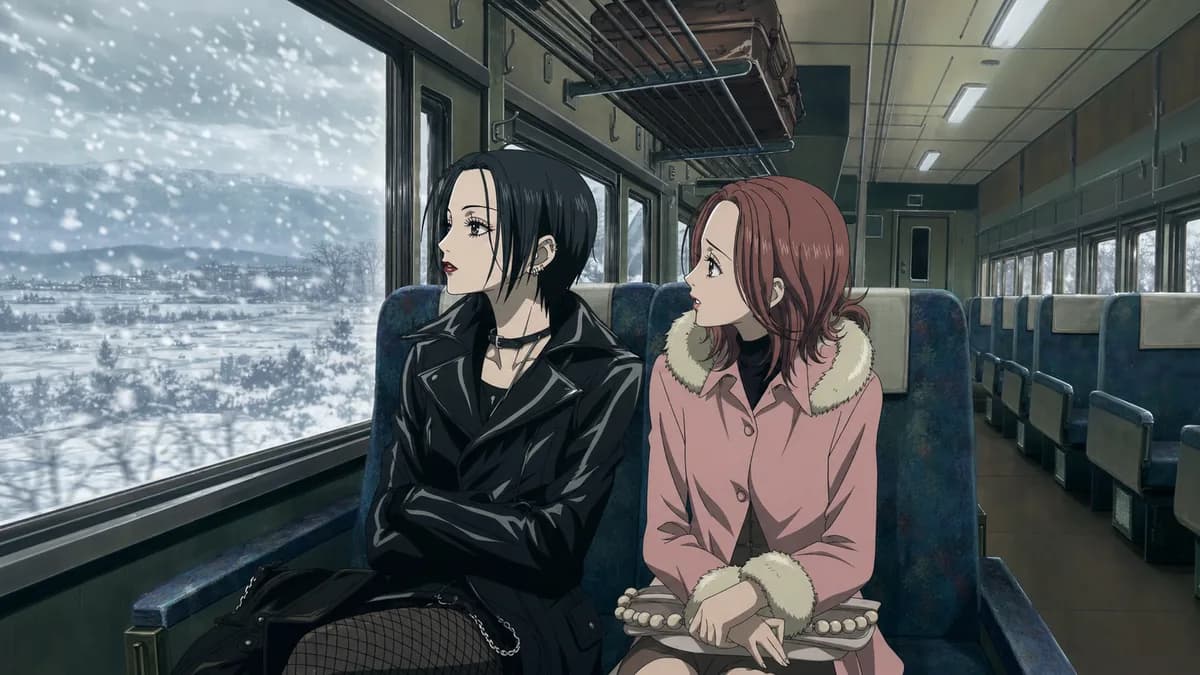
The story starts during a snowstorm, aboard a train bound for Tokyo. Two strangers happen to take the same seats and discover that both are named Nana. Yazawa needs no grander device to set everything in motion. Nana Komatsu is heading to the city after a boyfriend, carrying little beyond a vague hope that happiness is waiting for her there. Nana Osaki is traveling to reunite with an old flame and push her band, Black Stones, all the way to the top of the charts. A run-down apartment brings them together again and turns them into roommates. Their lives soon become inseparable, even though one revolves around romance and domestic security while the other burns with artistic ambition. The ordinary scale of the setup is a large part of its power. There is no fantasy hook, death game, or chosen one waiting in the wings. The pressures come from rent, gigs, former partners, cigarettes, and the fear that adulthood has arrived before either woman is ready for it. The music industry gives the plot steady momentum. Black Stones edges toward a record deal while living in the shadow of Trapnest, the mega-famous rival band. Yet the relationship between the two Nanas drives every development that matters. They depend on each other far more than either can admit, and Tokyo always seems ready to pull them in different directions. That tension makes even the quiet domestic scenes feel charged. You understand why apartment 707 becomes precious to them, and why every change outside its walls threatens the life they have made there.
The People at the Center of Nana
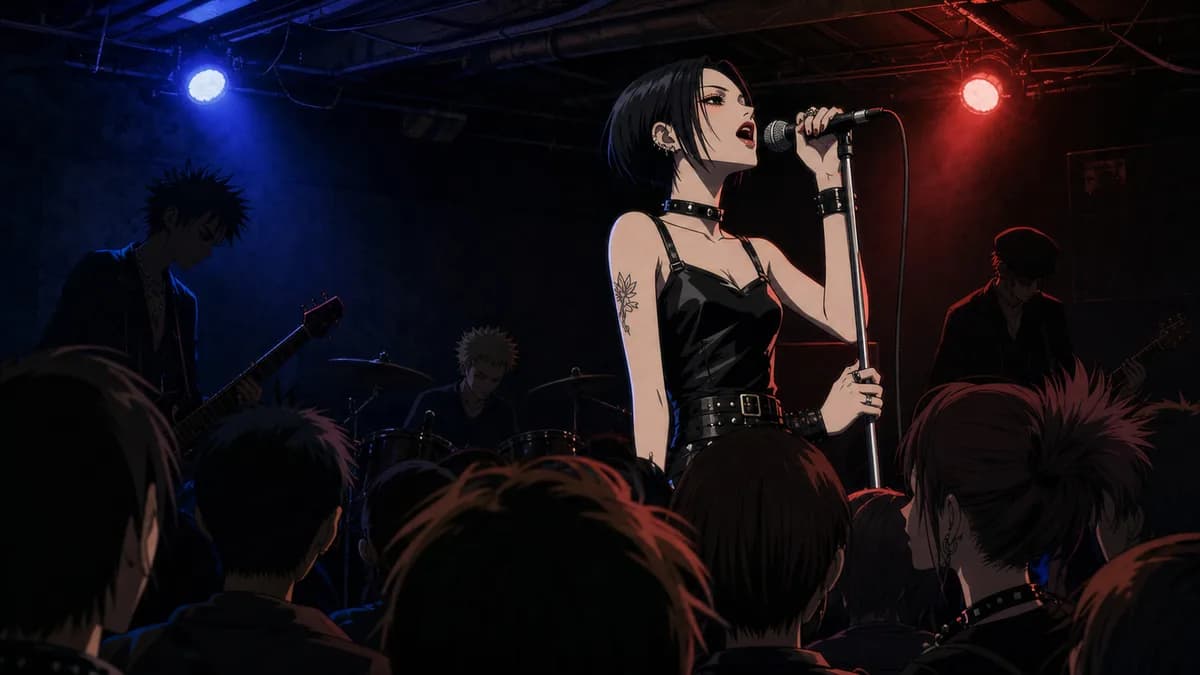
Nana works because its leads are opposites, with each woman possessing qualities the other badly needs. Nana Osaki has made armor out of her image. She is a Sex Pistols-worshipping vocalist in leather and a padlock choker, committed to her independence but deeply afraid of being left. Every old abandonment wound comes out when she sings. Nana Komatsu, whom the others nickname 'Hachi' after the loyal dog because she follows whoever she loves, is her tender inverse. She is warm and impulsive, hopelessly boy-crazy, and always apologizing for wanting somebody to take care of her. Their love for each other is the show's emotional center. Osaki wants Hachi to become stronger and more independent. Hachi wants above all to make Osaki happy. Neither desire is cruel, but the distance between them slowly hurts both women. The supporting cast is written with the same care. There is Nobu, the guitarist; Yasu, the steady drummer-manager; Ren, Osaki's former boyfriend who is now famous with Trapnest; and Takumi, Trapnest's magnetic and manipulative presence. None of them remains a convenient character type once the story puts pressure on them. Every person makes a genuinely bad decision, sometimes one that is hard to forgive, yet each remains sympathetic. Yazawa lets affection and frustration coexist. You can see the insecurity behind a selfish choice without being asked to excuse the damage it causes. That balance is one of the hardest achievements in character writing, and Nana sustains it across the whole ensemble.
Animation, Direction, and Music
The show's age is visible, but so is the personality that makes its visual approach work. Madhouse animates Nana with a grounded, muted palette suited to its adult mood. Smoky bars and cramped apartments replace the usual sparkle. Yazawa's instantly recognizable fashion illustration designs survive the move to animation, from the long limbs and sharp cheekbones to clothes that look as if they came directly from the manga. This was not a lavish production, and some stretches are noticeably stiff. An occasional crowd shot also lands flat. Director Morio Asaka understands that atmosphere matters more here than constant movement, so he gives faces and silences room instead of cutting away in search of spectacle. The sound is where the adaptation becomes exceptional. Nana depends on its music being convincing, and the performances deliver. Anna Tsuchiya sings for Nana Osaki and gives Black Stones a raw, snarling punk voice. Olivia Lufkin sings for Trapnest's Reira, offering an airier and more aching counterpart. Songs such as 'Zero' are not disposable material laid over the credits. They carry the feelings that the characters cannot state plainly, and they sound like music born from the lives we have watched. The characters bleed to write and perform these tracks, so each song also advances our understanding of them. Very few anime have joined soundtrack and story so thoroughly. Even when the animation budget becomes apparent, the direction and music preserve the emotional temperature of a scene. The result looks unmistakably of its period, which can be a limitation, but it also feels entirely like Nana.
Adult Life Without Easy Answers
A great deal of anime concerns the process of becoming an adult. Nana begins after that supposed threshold and shows its characters discovering that nobody gave them a manual. Its real subject is the untidy interior of adult life. Friendship becomes codependent. Love sours into jealousy. Ambition asks people to sacrifice the very relationships that keep them steady. Tokyo offers possibility while producing a particular kind of loneliness. Yazawa never divides the cast into good people and bad people. They cheat and lie. A pregnancy arrives at the wrong time. Some choose fame over love, while others choose love over sense. The series watches the consequences with compassion but without looking away. That moral honesty separates Nana from other relationship dramas. It does not lecture its characters, and it does not rescue them once a choice has caused harm. Instead, it allows them to remain flawed adults who are ambitious and scared, then makes the audience care about them anyway. The bond between the two women is the clearest expression of this approach. They adore one another and continue to wound one another, often because their ideas of love and protection do not match. Their friendship feels truer than what most live-action drama manages because affection never erases resentment, need, or fear. Anyone who has loved another person and briefly lost hold of their own direction will recognise something uncomfortable here. The pain is not manufactured for a twist. It comes from seeing familiar emotions carried to believable conclusions, including the ones the characters desperately hoped to avoid.
What Works and What Remains Unfinished
Viewers should know the shortcomings before starting, especially the largest structural problem: this adaptation has no ending. The anime faithfully covers a substantial early stretch of Yazawa's manga and then stops. The manga itself has remained on indefinite hiatus for years because the author's health forced her to pause it. No later season resolves these arcs. The conclusion is not hidden on another streaming service or available anywhere else. Discovering that only after becoming invested can be its own genuine heartbreak. The production also shows its age. At nearly two decades old, Nana can look flat and dated beside a modern series. Its pacing drags in places, and its frank treatment of smoking, sex, and adult subject matter puts it well outside all-ages territory. Those weaknesses are real, but they do not undo what the series achieves. The writing and character work are extraordinary, while the music gives the entire story a pulse that other dramas rarely match. Most important, the emotional truth is close to flawless. An absent ending cannot retroactively spoil the journey that exists. It does change how that journey should be approached. Start with clear expectations and accept that the anime will leave lives in motion rather than tying them into a finished shape. It is like boarding a train that stops before the final station. The interruption is frustrating, but the ride remains one of the best anime has offered.
The Verdict
Nana is not comfort viewing, and some viewers will find its pain exhausting. For the right person at the right time, though, few anime cut this deeply. It earns an 8.5 from me, matching the 8.5 settled on by the community and its position near the all-time top of the rankings. Two clear faults keep it from the final half-point. The production wears its age, and the adaptation ends in the middle of the story because the source manga remains on hiatus. Almost everything else is masterful. The two Nanas feel painfully alive, the punk rock soundtrack belongs inside their story, and the writing refuses to look away from the ways adults hurt people they genuinely love. Go in knowing that the narrative will not finish. Treat these episodes as a self-contained emotional experience rather than a promise of full resolution. Nana may leave a scar, but it earns that response through close observation instead of cheap manipulation. Some series are easy to leave behind after watching. This one becomes a memory you have to live with, and that is the strongest recommendation I can give it.
FAQ
Yes, especially when you want an emotionally intense adult drama instead of something light. Nana is one of anime's most honest and beautifully written character studies, which is why it receives an 8.5/10 from us and remains near the all-time top of fan rankings. It is mature and often painful, so choose a time when you are ready for a series that asks for real emotional investment.