
Mushoku Tensei Review: The Isekai Epic That Takes Its Premise Seriously
 By Mika Tanabe · Editor
Most isekai offer power fantasies with the safety on. Mushoku Tensei: Jobless Reincarnation takes the premise much more seriously. A thirty-four-year-old shut-in dies after wasting his first life and wakes as Rudeus Greyrat, a baby in a world of swords and sorcery. He remembers everything, including the fear and regret that kept him trapped before. His new life rests on a modest promise: this time, he will try. The series follows through on that idea instead of treating reincarnation as a quick route to wish fulfillment. Studio Bind also gives the story some of the most lavish television animation the genre has received. The result is beautiful and often deeply moving, but it can also be genuinely uncomfortable. Both sides matter. Its sincerity makes Rudeus's progress hit harder, while its ugliest choices can test a viewer's patience long before the story pays them back.
Story and Premise
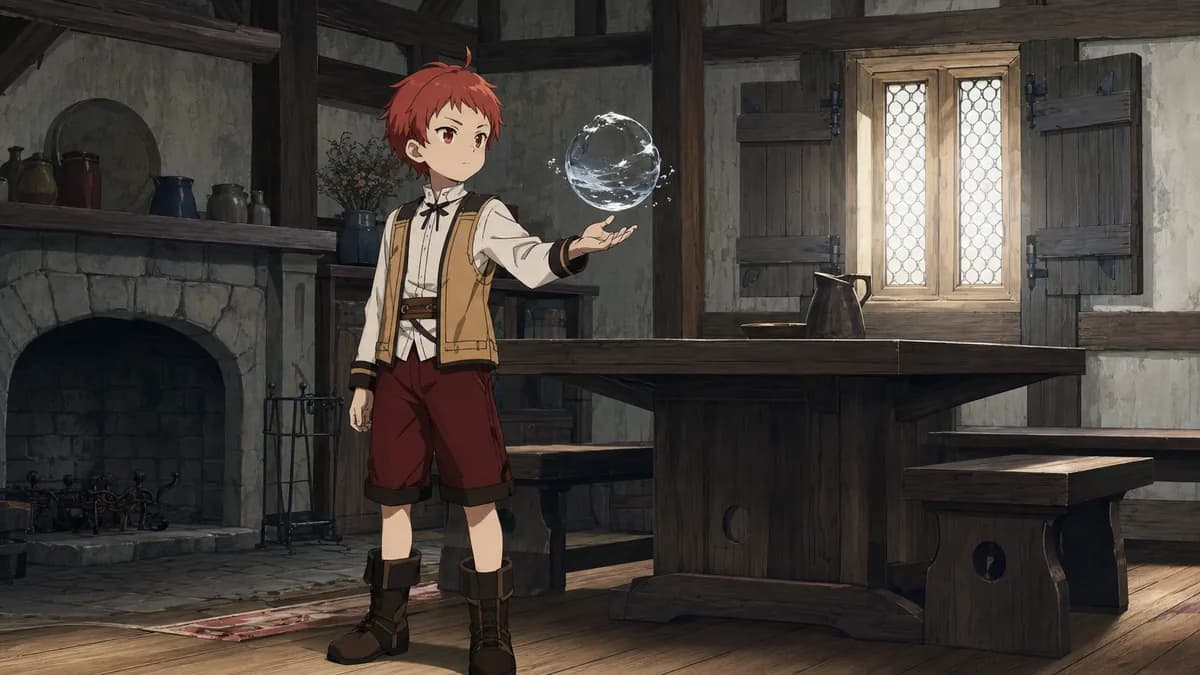
The opening lands because the hero understands exactly how badly he failed himself. Before his death, he is a friendless, jobless man in his thirties. Fear and shame have reduced his existence to one room, and then a street accident ends it without warning. The story could have stopped there. Instead, he is reborn as Rudeus, an infant in a warm, ordinary household on a fantasy continent. He brings every memory and regret from his old life with him, so the clean slate is never truly clean. He still has to live with the person he was. Given another chance, Rudeus finally does what his former self could not: he starts. He opens a spellbook, discovers an extraordinary gift for magic under a wandering tutor, and begins building a life one uncertain step at a time. The early arc works because it does not rush past that process. A mentor's approval matters. So does a first friendship, along with the quiet possibility that a family could fracture. These are intimate stakes, and the show lets them carry real weight. Then a world-shaking catastrophe rips away the security Rudeus has only begun to trust. The sudden change works because the ordinary life before it felt tangible. This is not an automatic victory lap for a reincarnated hero. It is the halting first effort of someone who knows what giving up already cost him.
The People Around Rudeus
Rudeus is difficult by design. He can be brilliant and kind to people who earn his trust, but he is also an adult mind carrying years of damage inside a child's body. The series does not smooth away that contradiction or pretend it produces clean, easy behavior. Fortunately, the cast around him is far richer than a collection of fantasy roles. Roxy Migurdia, his first tutor, feels like an actual mentor rather than a delivery system for magic lessons. She is gentle and a little insecure, and her influence quietly shapes his future. Sylphiette is the timid friend who accepts Rudeus before he has done much to deserve that faith. She becomes the emotional anchor of his early years. Eris Boreas Greyrat begins as a spoiled, hot-tempered noble, and her connection with Rudeus has to be fought for. Their bond is prickly and funny because neither of them changes on command. Ruijerd Superdia brings the steady presence of a stoic warrior. Paul, Rudeus's father, is a roguish swordsman whose own flaws keep their family dynamic complicated. Ghislaine is fearsome without feeling like a prop added to make the group look tougher. Together, they give the fantasy continent the sense that people already had lives before Rudeus arrived. Relationships drive the series. Magic and monsters shape the conditions in which these people grow up, but approval, loyalty, resentment, and affection determine what the story means.
Animation and Sound
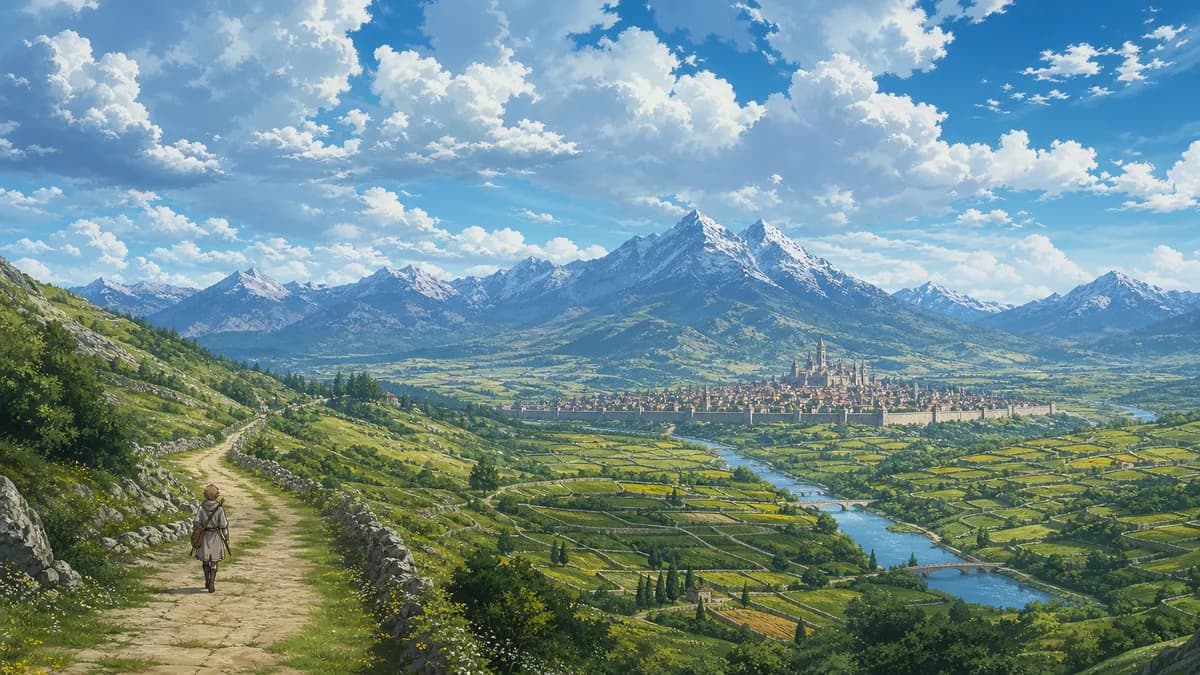
Studio Bind puts the production budget on the screen. The young studio was assembled around this adaptation, and it approaches a genre often produced cheaply with the attention of prestige cinema. Backgrounds receive obsessive care. Sun-bleached villages look occupied rather than arranged for a shot, while misty forests carry a sense of depth and weather. The continent feels lived in instead of pasted behind the characters. That care extends to movement. Character animation remains fluid during scenes where a lesser isekai might save money with still frames, and the magic has force when the series finally lets it erupt. Spectacle is only part of the achievement. Domestic scenes are allowed to breathe, with framing and pacing that treat a conversation at home as something worth watching closely. The show understands that ordinary movement can reveal just as much as a spell. Yoshiaki Fujisawa's score does a great deal without calling attention to its effort. It moves from cozy warmth to genuine awe, supporting the change in scale without flattening every scene into grandeur. The soundscape gives the world a fullness that is uncommon for the genre. All of this craft draws the viewer in before the larger plot has fully taken hold. You believe in the place because its rooms, roads, forests, and voices seem to exist beyond the immediate scene. That conviction allows the drama to feel personal even when the story grows much bigger.
Second Chances and Serious Fantasy
Beneath the swords and magic, Mushoku Tensei studies the fear of wasting a second chance. Its Japanese subtitle roughly translates to 'if I go to another world, I'll get serious this time,' and the story keeps returning to that promise. Many isekai give the hero immediate confidence along with a convenient cheat power. Rudeus receives remarkable ability, but confidence and maturity do not arrive with it. He has to earn every bit of growth while dragging the old weight of cowardice behind him. Progress comes through repeated choices, including small ones that would look unimportant in a conventional power fantasy. This makes the series feel closer to a character study than simple wish fulfillment. Rudeus is broken, and deciding to improve once does not repair him. He has to make that decision again each day, sometimes badly. The setting supports the same patient approach. It has its own history, races, politics, and logic for magic, but the series rarely stops to recite a block of information. Viewers learn by watching people live there. Customs appear through encounters, and the wider world becomes clear as Rudeus experiences it. The detail never feels like decoration added to make a map look busy. It gives his actions context and makes distance, danger, and belonging matter. The show's seriousness is its appeal. It treats fantasy with the patience of literature rather than presenting a theme park for its hero. People who usually roll their eyes at isekai may find that this one earns their attention.
Where It Excels and Where It Falters
Any honest review has to confront Rudeus's behavior. He is genuinely creepy at times. A grown man's mind remains inside a child's body, and the show repeatedly draws on that setup for lecherous or voyeuristic material. There is peeping, there are inappropriate fixations, and there is ecchi fan service that becomes especially unpleasant because of who is involved. Some viewers will see this as a firm reason to stop watching. That is a fair response, not a minor complaint that fans should wave aside by telling people to push through. The series presents these traits as flaws in a damaged man who is undergoing a slow rehabilitation. It does not ask the audience to regard every impulse as admirable. Even so, framing the behavior as a flaw cannot make those scenes comfortable to watch, nor does it cancel the choices behind them. The pacing creates a different sort of barrier. Mushoku Tensei moves with the deliberate rhythm of a novel and asks viewers to wait for its emotional returns. Anyone looking for instant gratification may find the build frustratingly slow. Those costs sit beside exceptional strengths. The production is astonishing, the emotion feels sincere, and the worldbuilding reaches a standard that most fantasy anime never approach. Its best moments gain power from the time spent on daily life and gradual change. Calling it a flawed masterpiece is accurate only if both words receive equal emphasis. Its problems are real enough to drive people away, while its accomplishments are too substantial to dismiss.
The Verdict
Mushoku Tensei: Jobless Reincarnation takes one of isekai's most exhausted premises and gives it the weight of a real story. The score of ninety is a statement about what the series achieves. This is a landmark that showed reincarnation fantasy could support genuine emotion and serious artistic ambition, backed by production values the genre had frankly never earned before. It is still not a recommendation for everyone. Rudeus's lecherous streak carries a real cost, and the show's ecchi impulses make several scenes difficult to defend or endure. Its patient structure also expects trust well before it offers a reward. Viewers who need quick momentum may not want to grant it that time. Those who can accept the series on its own terms will find a beautiful, sincere coming-of-age epic built around a broken heart. Rudeus's second life does not erase the first, and that tension gives his smallest steps meaning. The show can be flawed and genuinely special at the same time. Its discomfort should not be minimized, but neither should the unusual care behind its characters and world. Whether it wins you over or pushes you away, it is impossible to treat as disposable genre filler.
FAQ
For most isekai fans, yes, though the recommendation comes with a serious reservation. It is among the best-produced and most emotionally sincere shows in the genre, and it treats reincarnation with unusual care. Rudeus's lecherous behavior can also be creepy enough to stop some viewers cold. If you can tolerate that material, the series comes close to essential viewing.