
The Anime Crime Saga: Why Mob Stories Fit Anime So Well
 By Mika Tanabe · Editor
Anime has a habit of producing crime sagas that leave their live-action cousins looking unfinished. The advantage comes from structure rather than style. A mob story makes a contract with its audience. Someone takes the family's money and name, then waits for the family to collect. The payoff only works when the story is allowed to finish. Anime usually plans for that finish, while open-ended prestige television has to leave room for another renewal. 91 Days lays out the case with unusual clarity. It is an original story told in one tight cour, following a man who enters a bootlegging dynasty to settle an old debt. There is no future season waiting to cushion the impact. Anime's production model gives such stories a destination from the beginning. Its fondness for found families gives the betrayal real weight, while stylization lets directors strip crime fiction down to its moral machinery. Those qualities happen to suit the gangster story remarkably well.
Mob Stories Need an Ending, and Anime Plans for One
Every great gangster narrative closes the loop it opens. The bargain arrives early. Interest builds over time, and the final act collects what is owed. Live-action crime television often works against that shape. Success brings renewal, so the debt gets pushed into another season instead of being paid. Anime generally starts from the opposite assumption. A finite run can be storyboarded from beginning to end, with the finale on the schedule before the first frame ships. That difference matters enormously in 91 Days. It is an original work from shuka, so there was no ongoing manga for the adaptation to catch and no publisher insisting that the premise keep generating material. Taku Kishimoto's series composition could direct every development toward a fixed landing. The episodes carry the pressure of a story that already knows the bill will come due. Banana Fish shows the same discipline when it commits to an ending so blunt that a renewable drama would probably retreat from it. Gungrave takes another route, using its opening stretch to build the emotional debt that the rest of the show must collect. Tokyo Revengers offers a useful contrast because time travel repeatedly gives the same tragedy fresh financing. Katekyo Hitman Reborn! treats the syndicate as a ladder for its characters to climb, rather than an obligation waiting to be settled. All of those approaches can work, but the classic mob shape depends on finality. Anime is comfortable budgeting for finality from the start.
Found Family Becomes the Sharpest Weapon
Anime's most dependable emotional engine may be the family people assemble for themselves. Strangers form a crew, then gradually discover that the crew is the only home they have. Crime fiction takes that familiar source of comfort and makes it dangerous. In 91 Days, Angelo Lagusa returns to Lawless using the name Avilio and proves himself useful to the Vanettis. He grows closest to Nero, the don's son and the one person he can least afford to spare. Their relationship cannot be dismissed as a subplot because it drives the whole story. Each sincere, easy hour between them raises the eventual cost. The warmth hurts later because the series gives it enough time to feel genuine first. Black Lagoon makes a similar bargain through the Lagoon Company, which often resembles a workplace comedy built over a pile of corpses. The jokes and everyday friction make the crew feel lived in, which gives every threat against it extra force. Bungo Stray Dogs gives the Port Mafia a loyalty that feels entirely sincere, so its violence lands with greater force. Beastars puts a whole lion syndicate through the wringer in much less time and still makes the bond register. These shows understand why family language has always belonged to mob stories. Loyalty sounds noble until the same bond becomes a command, a debt, or a sentence. Anime already knows how to make viewers care about an improvised home. Crime stories simply force everyone inside that home to learn what belonging costs.
Stylization Makes the Moral Choices Clearer
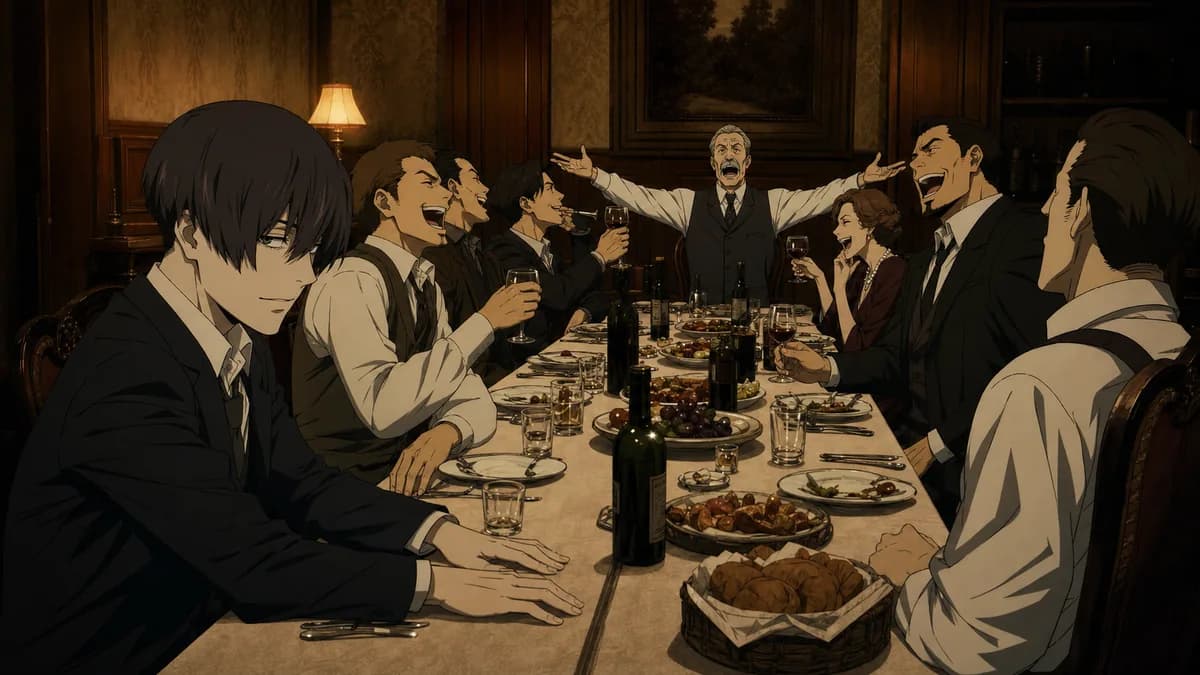
The complaint that animation flattens a naturalistic genre has the matter backwards. A drawn frame can hold on a decision longer than a live performer can sustain the same beat before the shot loses tension. Hiro Kaburagi stages 91 Days with exactly that patience. Rooms remain quiet while men calculate what to do, and the camera avoids telling the viewer who deserves sympathy. The restraint gives every pause a purpose. Hiromasa Ogura's art direction makes the town feel heavy with smoke and brick without turning the setting into a travel brochure. Tomohiro Kishi's character designs leave the faces adult and unheroic. Shougo Kaida's score stays controlled in scenes where a live-action production might reach for a swell. ELISA's ending theme handles emotional accounting that many full finales fail to manage. None of those choices make the crime prettier or safer. They make the consequences easier to read. Texhnolyze pushes the same idea toward abstraction as it depicts a syndicate war inside a dying city. Gankutsuou covers its revenge story in patterned textures, making inherited wealth resemble a disease spreading across every surface. Cyberpunk: Edgerunners uses colour saturation to mark a kid's descent into the underworld. The visual approach changes from show to show, but the function remains precise. Animation can isolate a look, a silence, or a sickly excess of colour and keep it there until the viewer understands what a character has chosen. Stylization is doing moral work, not sitting on top of the story as decoration.
The Best Objection Is That It Looks Like Cosplay
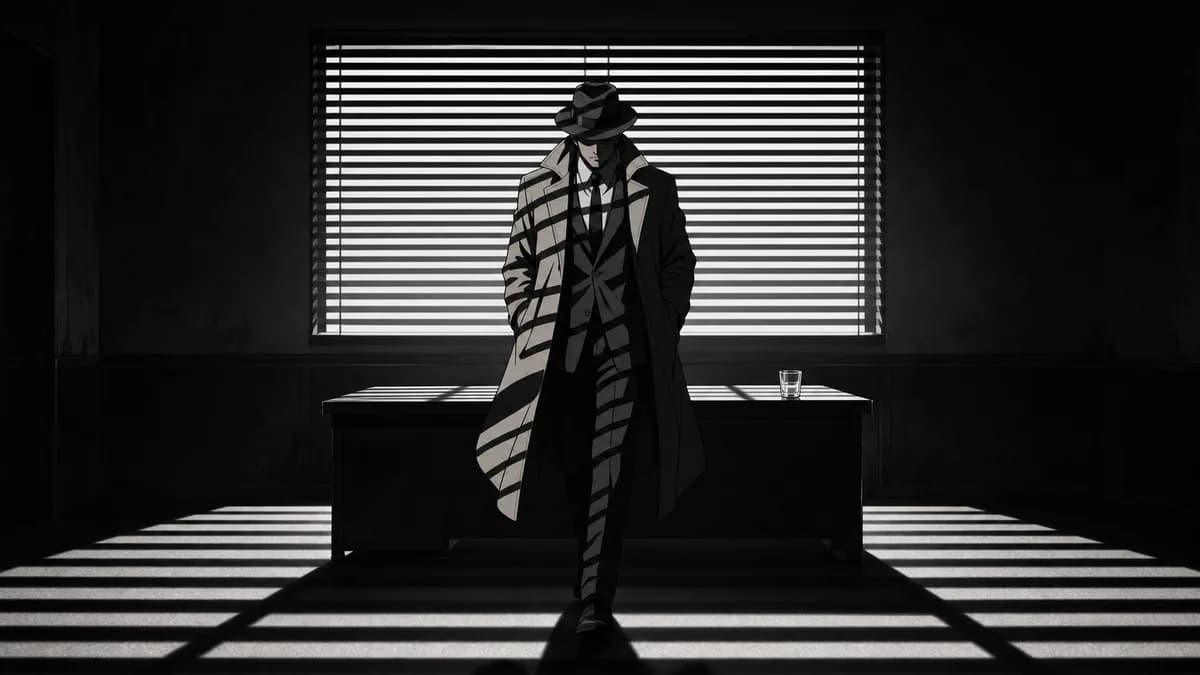
There is a serious case against this whole argument. A Japanese studio depicting Prohibition-era American organized crime is drawing chiefly from movies rather than lived experience. The fedoras, tommy guns, and long family dinners come from borrowed iconography, and viewers can see the borrowing. Anime also has a bad habit of turning the crime genre into shonen in a good suit. Syndicates become tournament brackets, capos become boss fights, and honour codes float free of any underlying economics. That criticism describes the average example fairly well. It does not explain the strongest ones. Distance from the real criminal ecology can allow a series to isolate one moral mechanism instead of trying to document an entire social system. 91 Days never presents itself as reporting on the mafia. It behaves like a controlled experiment designed to measure what revenge costs the person carrying it out. The familiar clothes establish the genre quickly, then the story concentrates on that cost. Michiko & Hatchin achieves something similar in an invented Latin-American sprawl. It borrows a recognisable setting so it can focus on the people tearing through it. Great Pretender uses the mechanics of the con to argue about self-invention instead of treating each case as a crime procedural. The clothes may be borrowed, but the body wearing them is original. Live-action crime drama is hardly innocent on this count either. It has its own house style, and filmmakers copy that style constantly. Authentic props cannot rescue a story with nothing to say. A borrowed fedora does not sink one that understands its characters.
Crime Works as a Story Chassis
These stories travel so well because the underworld supplies a structure rather than a single subject. It runs on hierarchy and debt. Everyone keeps secrets, and discovery remains possible at any moment. A writer can attach wildly different tones to that chassis without stopping it from working. The Way of the Househusband plays the setup for warmth, redirecting an ex-enforcer's frightening competence toward grocery shopping. Sakamoto Days chooses speed and understands that logistics are the real headache in a hitman's working life. Monster turns the structure toward dread. Its manhunt transforms one humane choice by a surgeon into a reckoning that lasts for years. Death Note reduces the syndicate to one participant and his auditor, preserving the pursuit while discarding the organisation around it. Kaiji pares the same machinery back until almost nothing remains except debt. Durarara!! distributes it across a city, where every subplot eventually gives someone else power. Odd Taxi buries the structure beneath casual conversation and waits until hindsight to reveal its full shape. The examples do not share one mood, visual language, or kind of protagonist. What links them is pressure. A character enters a system of obligations, conceals something dangerous, and discovers that every favour has an owner. That is why crime elements can survive comedy, action, horror, psychological drama, and urban mystery without feeling pasted on. The genre machinery is still moving beneath the change in tone. This degree of translation reveals genuine structural work rather than a collection of familiar costumes.
The Cost of Compression, and Why 91 Days Still Makes the Case
A fair account also has to include what anime's compact format gives up. The classic mob epic draws much of its power from sprawl. It can cover years and generations, allowing viewers to watch someone rot slowly after first meeting them as a decent person. One tight cour cannot purchase that kind of time. 91 Days pays for its strong sense of inevitability through compression. Some supporting Vanettis deserve more room, and the middle stretch has to move faster than the emotions beneath it. The destination is clear, but parts of the journey are forced to hurry. Vinland Saga has a much longer road and uses that space to attempt something 91 Days cannot fit within its structure. It examines revenge from the far side and lets a man survive long enough to become someone who no longer wants it. That is a genuine advantage, and any comparison has to grant it. Still, length does not automatically produce consequence. A story can spend years with its characters and refuse to make them pay. 91 Days always knows where it is headed, and when it reaches that place, it does not look away. Its resolve contains the gangster genre in miniature: a debt is created, intimacy increases its price, and the collection finally arrives. Watch it on Crunchyroll, then sit with your reaction to the closing stretch. The discomfort comes from seeing the story honour the contract it made at the start. A longer series might have offered escape routes. This one closes them.
FAQ
Start with 91 Days. It is a self-contained mob drama with an adult cast, no power system to study, and an ending that follows through on its promises. After that, try Black Lagoon for firefights and gallows humour, Banana Fish for emotional wreckage, or Great Pretender for the con-artist side of crime anime.