Studio White Fox and the Art of the Slow-Burn Thriller
 By Mika Tanabe · Editor
Ask an anime fan what defines a studio and the answer will usually be visual: a certain glow, a kind of linework, the sakuga that gets clipped and shared. White Fox is harder to identify from a single frame. Its strongest work is linked by structure instead. These shows deliberately begin in the wrong genre. One looks like a hangout comedy, another resembles a wish-fulfilment fantasy, while another settles into the rhythm of a workplace sitcom. White Fox plays that opening mode straight and gives it room before pulling the floor away. This is a repeatable studio method, not a lucky streak of well-chosen source material. The shock everyone remembers is not even the difficult or expensive part. The real work happens during those relaxed hours that can look frivolous at first, because the later blow has no force without them.
The opening act sells you the wrong show
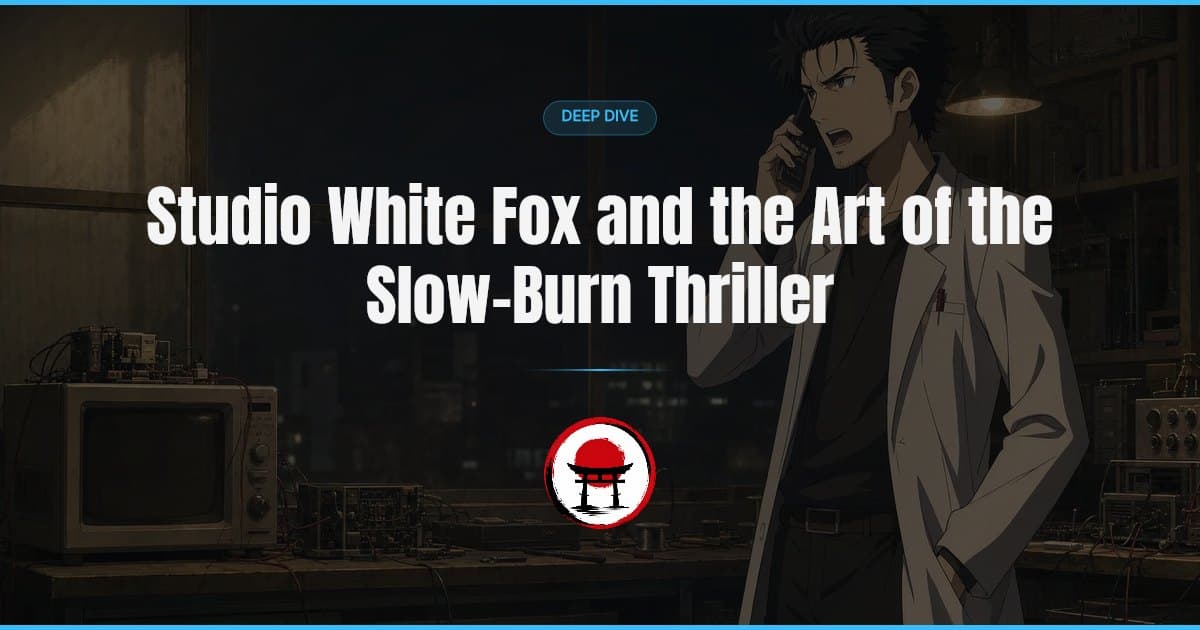
Steins;Gate first presents itself as a loose Akihabara comedy. A self-appointed mad scientist delivers grand speeches into a dead phone. His lab members argue over useless gadgets, and somebody jury-rigs a microwave so it can answer text messages. None of this signals that a psychological tragedy is on its way. Most series in the genre announce their intentions much sooner. Death Note gives you the premise almost at once, then asks you to enjoy the chess match that follows. Erased leads with its hook because that hook is what brought the viewer in. Even Puella Magi Madoka Magica, still the reigning champion of the tonal swerve, sets off its trap early and with plenty of noise. It then remains in that darker register for the rest of the run. White Fox chooses a slower and more convincing deception. Its comedy does not behave like a cold open that can be thrown away as soon as the plot turns up. It fills an entire act, with writing and performances committed enough to persuade plenty of viewers that this is the show they will be watching. All the while, Steins;Gate is creating affection for these people and their routines. The series knows it will collect on that affection later, but it never hurries the bill into view. That restraint is why the change feels like a loss rather than a routine genre switch.
Re:Zero repeats the move in a genre built for speed
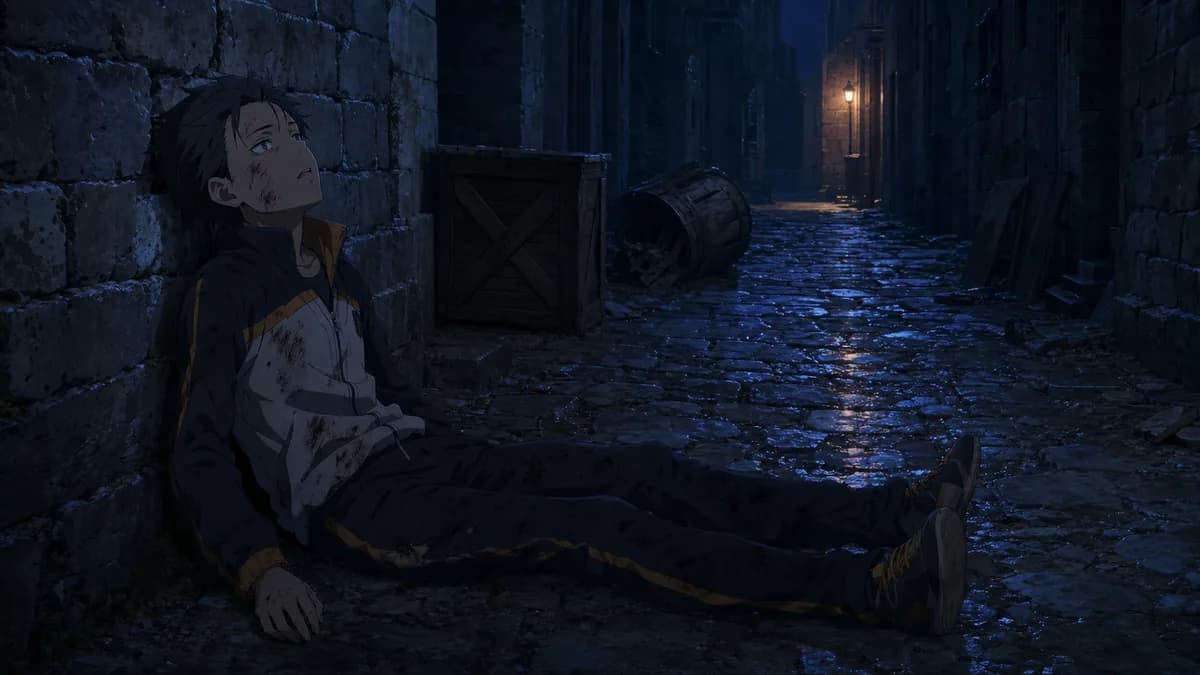
One great adaptation would not prove a studio method, so Re:Zero makes the stronger case. It works like a control experiment. Isekai usually runs on instant gratification. Sword Art Online and That Time I Got Reincarnated as a Slime deliver the power, the party and the payoff quickly, which is largely what their audiences came to see. Re:Zero initially speaks the same language. A nobody lands in a fantasy city, starts striking heroic poses and treats the situation like a light adventure comedy. The reveal of its central mechanic changes the bargain. For Subaru, that mechanic is a punishment. Death rewinds him, yet nothing else resets. He keeps the memory and the damage, and he alone carries the knowledge of what happened while everybody around him remains unmarked. The show turns the genre's promise of a do-over against its protagonist. It also refuses to rush Subaru into being sympathetic. He remains insufferable for long enough that his eventual collapse feels like an actual collapse, not an appointment on the plot schedule. The pattern matches Steins;Gate even though the genre around it is different. White Fox establishes a comfortable form, commits to it and only then exposes the cost hidden inside. Repetition at that level is what makes the approach a house style.
The best counterargument starts with the source material
There is a serious objection to giving White Fox the credit: the studio did not invent these structures. Steins;Gate was adapted from a Nitro Plus visual novel, and visual novels are slow burns by construction. They can spend hours on low-stakes routes before reaching the branch that changes the meaning of everything that came earlier. Re:Zero began as a light novel, with the loop already built into its premise before an animator worked on it. Seen this way, White Fox is a capable adapter with excellent taste in patient material. Its supposed signature might be a well-stocked shelf. That argument loses some force once the pressures of adaptation enter the picture. Moving a slow burn into a weekly broadcast makes it remarkably easy to wreck. On a ratings chart, a patient first act can look exactly like a dull one. The safer choice is to squeeze the setup, arrive at the hook faster and reassure viewers about the series they are getting. White Fox repeatedly declines that option, and the refusal itself is a creative decision. The studio also applies the same cold focus on consequences to source material that did not demand such treatment. Akame ga Kill! and Goblin Slayer are pulp. In both adaptations, the violence is staged so that somebody pays a cost. Source selection matters, but it cannot fully account for a choice that keeps appearing across different kinds of material.
What all that waiting pays for
Under Hiroshi Hamasaki's direction, the everyday detail in Steins;Gate carries weight instead of serving as set dressing. The apartment lab is cluttered. Akihabara looks recognisably real. Long scenes are driven by dialogue, with no plot development to justify their presence beyond a group of misfits acting like friends. This is White Fox paying in advance for what the story will eventually ask from the audience. A montage cannot make you grieve someone you have only technically met. The comic first act solves that problem gradually. Each apparently wasted summer afternoon in the lab becomes something the story can take away later. When it finally does so, with the specifics best left unspoiled, the change in tone arrives without a warning shot. The Devil Is a Part-Timer! also belongs in this discussion for an important reason. It is a White Fox comedy with no dread at all, and it is genuinely funny. That series shows that low-stakes comedy is not a task the studio tolerates while waiting to reach darker material. White Fox understands the timing and character work that make those scenes enjoyable on their own. The thrillers depend on that comic ability. If the lighter show were merely an obvious disguise, viewers would never grow comfortable inside it, and the later turn would have much less to take from them.
The method has a real cost: viewers leave early
The three-episode rule is almost designed to kill a White Fox series. This approach carries a genuine price for the studio and for the viewer deciding what to keep watching. Steins;Gate may be the most-dropped great anime in the medium. Many people encounter a loud man in a lab coat yelling about organisations, then reasonably decide that they have understood the whole product. Anyone trying Re:Zero without advance knowledge can read its opening stretch as generic isekai. Those reactions are a consequence of the construction, not evidence that the audience lacks taste. Studios that place the unease at the front avoid the same problem. Higurashi: When They Cry shows you that something is wrong from almost its first scenes, while Monster begins working its dread on the viewer straight away. White Fox asks for more trust and inevitably loses people who have no reason to grant it. The viewing advice follows directly from the way these series are built. Approach a White Fox opening as a continuous arc instead of a three-episode audition. Stay away from plot summaries and thumbnails, since either can expose the turn before the opening mode has had time to feel normal. Then allow the false version of the show to work as intended. The method depends on viewers giving it that opportunity, and it cannot function properly for anyone who already knows exactly when the trapdoor opens.
FAQ
Steins;Gate remains the studio's calling card, while Re:Zero is its modern flagship. Together they established White Fox's reputation for patient stories in which consequences carry real weight. The full catalogue covers a wider range than that reputation might suggest. It includes pulp action in Akame ga Kill! and Goblin Slayer, along with direct comedy in The Devil Is a Part-Timer!.