
The Isekai Power Curve: Why Overpowered Heroes Still Work
 By Mika Tanabe · Editor
Isekai heroes do not become boring simply because they are too strong to lose. That familiar complaint treats power as a fixed number, while stories unfold over time. The useful measure is the curve. Look at when the hero gains strength, what the world demands in return, and which problems remain stubbornly beyond that strength. If a series handles those choices well, an almighty hero supplies the premise instead of spoiling the outcome. If it handles them badly, lowering the hero's power will not make the story any livelier. The Water Magician lays out this distinction with unusual clarity. Its progress happens in full view, at a pace slow enough for us to see how the curve is built.
Power Depends on Timing
Give two isekai protagonists identical strength and their shows can still feel completely different. Strength alone does not create drama or kill it. Its position on the story's timeline matters, especially in relation to the problem the story truly cares about. When power appears before that problem has even formed, the remaining plot can feel like paperwork. When it arrives after a long struggle, it feels earned. When it grows while the outcome remains unsettled, it produces suspense. Much of the genre's real craft lies in this scheduling, even if careful timing is harder to sell in a trailer than a spectacular spell. The Water Magician makes the process easy to study because it never hides where Ryou Mihara is headed. Early signs tell us that he will become close to almighty. Even so, the opening movement leaves him alone on a wild coastline, learning through patient effort what water magic can do. The creatures around him would happily eat him, so each experiment has an immediate purpose. We already know the ceiling will be high, but knowing that does not erase the work between his starting point and that destination. His climb supplies the story's substance. The final number was never enough to explain why watching him reach it remains satisfying.
A Hero's Strength Can Tell His Life Story
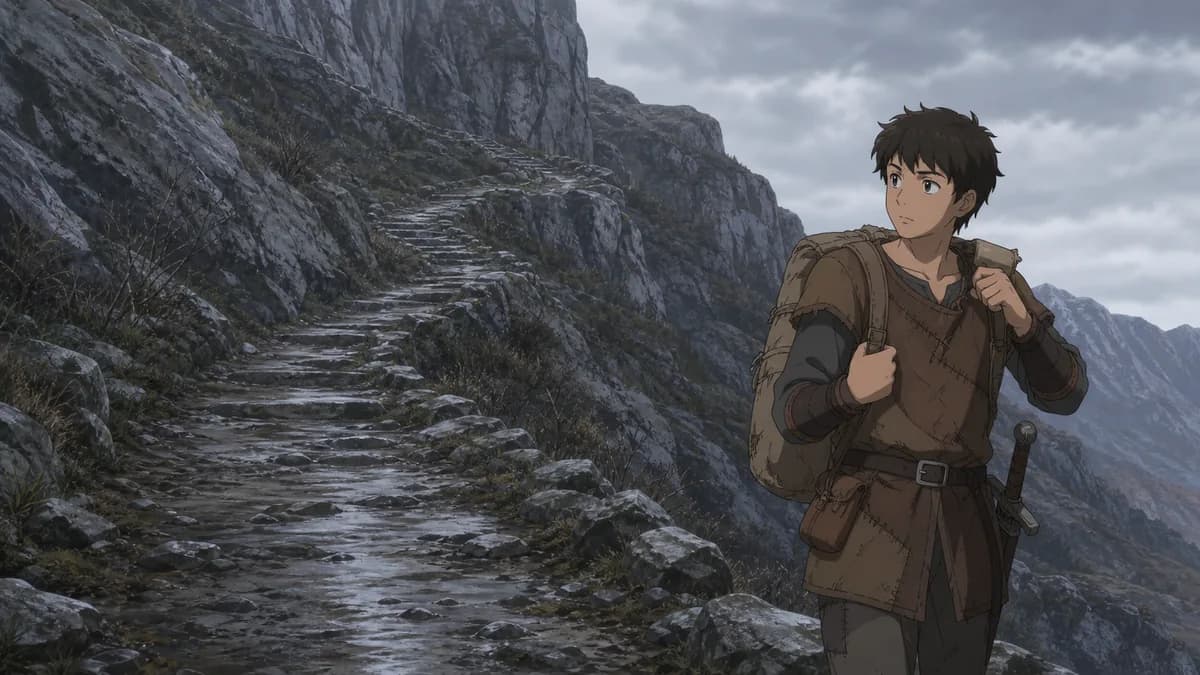
Power becomes most interesting when it reads like a record of the person who earned it. Mushoku Tensei: Jobless Reincarnation remains the benchmark. Its lead's abilities cannot be separated from the drills and teachers that shaped them. The humiliations matter as well, and so do the plateaus. A spell used late in the story still carries the memory of the person who taught it. Ascendance of a Bookworm applies the same pattern without combat. Its progression comes through craft, literacy and patience with institutions, showing that the curve works perfectly well when nobody is fighting. The Faraway Paladin devotes its entire first movement to a child raised by mentors, then allows the wider world to intervene. The Water Magician chooses an even bolder timescale. Ryou's hidden Eternal Youth trait makes time cheap, which lets the show devote roughly two decades to solitary trial and error in monster-thick wilderness before human society appears. Tadashi Kubou's light novels treat the isolation as the actual story, rather than preliminary business to clear away. Director Hideyuki Satake stages that period at typhoon graphics and wonderland as daily practice. Ryou experiments, improves what works, and survives long enough to try again. Repetition gives every later display of mastery a past. His abilities feel attached to years he has lived, not handed over by a menu screen when the plot needs a larger attack.
Starting at the Top Changes the Question
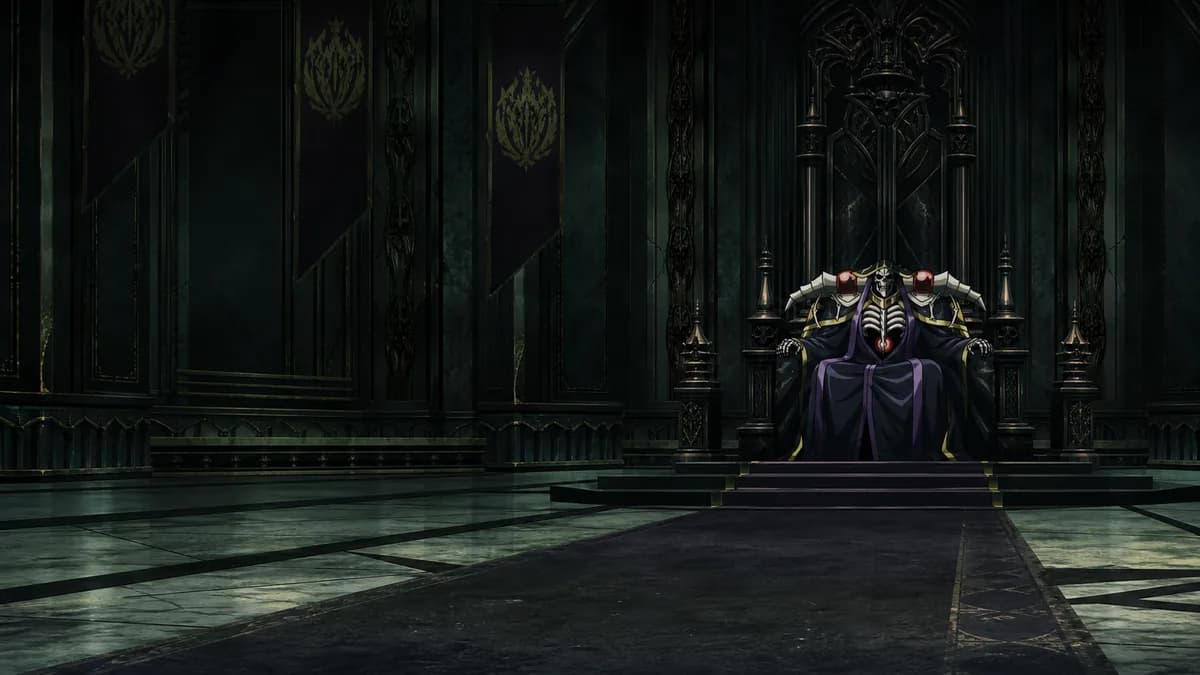
A series can also begin with its hero already at the ceiling. This reverse schedule works when the writers accept the consequences and move the dramatic pressure somewhere power cannot remove it. Overlord does exactly that. Its lead receives overwhelming strength at once, while the tension comes from other people's terror and his own frantic improvisation behind a serene skull. Dramatic irony takes over the job that ordinary combat suspense once performed. That Time I Got Reincarnated as a Slime turns raw strength into infrastructure. The result is cheerfully concerned with diplomacy, settlement and civic administration, all presented in a fantasy coat. Saga of Tanya the Evil directs its certainty toward institutions. Whether Tanya wins an engagement is rarely the live issue. What matters is the effect of her victories on the war machine behind her. The Eminence in Shadow makes the apex into farce, with a hero who thoroughly misunderstands the conspiracy he keeps dismantling by accident. The Devil Is a Part-Timer! reverses the setting once again. Its demon lord begins at maximum power, loses that position, and ends up working a part-time shift. Taken together, these shows make the genre's method plain. Power is a variable a writer can turn up or down. It is not a reward that automatically produces the same type of story whenever it appears.
Power Works Better When the Bill Arrives
The sharpest isekai drama often comes from power with a price that the story actually collects. Re:Zero offers the definitive example. Its hero has an ability functionally indistinguishable from trauma, paid for through deaths that only he remembers afterward. A setup that resembles wish fulfilment becomes an endurance test because every apparent reset leaves its mark on the person using it. The Rising of the Shield Hero collects payment through social contempt. Every gain has to be dragged upward against a world that refuses to withdraw its judgment, so greater competence never purchases acceptance. Grimgar of Fantasy and Ash pushes the idea furthest by almost removing the curve. Ordinary competence becomes the achievement, and survival itself is the reward. The Water Magician charges Ryou more quietly. Eternal youth provides enormous freedom for training, but it also guarantees that he will outlive everyone the story eventually gives him. Roughly two decades of improvement also mean roughly two decades alone. Once the series admits other people into his life, including Abel and Sara, they encounter a man who has measured himself only against the wilderness. That history changes the meaning of his mastery. He gained time to perfect his magic, but he spent those years without human company. The isolation is what the power cost, even when no stat screen lists it as a penalty.
The Real Problem Is a Curve the Story Never Runs
The strongest version of the complaint against overpowered heroes identifies a genuine failure, but blames the wrong feature. Too many isekai series announce a cost and then decline to collect it. A setback survives for one scene before disappearing. Stat screens do work that should belong to the plot, while an expanding harem supplies the appearance of progress. In plenty of shows, the near-almighty protagonist functions as a marketing position as often as a considered design choice. Arifureta: From Commonplace to World's Strongest is a fair test case. Its early descent is genuinely brutal, yet the consequences soften far sooner than that descent earned. This criticism fits the median show, and viewers who know the genre have seen the pattern often enough to recognize it. Still, a high ceiling is not the cause. You can diagnose the difference early by watching the opening stretch and checking whether the hero's power ever fails to solve the scene's actual problem. Re:Zero answers yes repeatedly before the first act closes. The Rising of the Shield Hero, Ascendance of a Bookworm and Mushoku Tensei do the same. A show faking its curve gives a different answer: never, not once, even briefly. That short test takes about two minutes of attention and reveals whether the promised limits have any force. Isekai does not set its ceiling according to the hero's strength. Each series sets it by keeping, or quietly abandoning, the costs it placed in its own account.
FAQ
No. The writing fails when the story declares a cost and never charges it, not when the protagonist reaches a high power level. Overlord and That Time I Got Reincarnated as a Slime both operate with near-total certainty about their heroes' strength. They remain gripping because the consequences carry the stakes after doubt about victory has mostly disappeared.