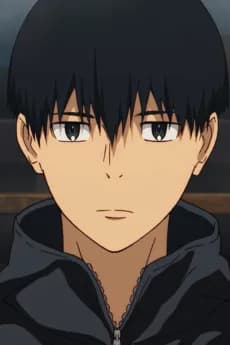
Kakeru Kurahara
Run with the Wind universe
Kakeru Kurahara makes running look less like a clean escape than a demand placed on the body, and that tension gives Run with the Wind its first sharp edge. Watching him means noticing how quickly physical confidence can turn into impatience, then asking whether the pace he sets for himself leaves room for anyone else. The series is strongest when it lets that friction sit in the frame instead of explaining it away. He has the focus of someone who would rather move than discuss moving, which can be bracing and occasionally difficult company. That difficulty is part of the appeal: Kakeru does not arrive prepackaged as an easy source of inspiration.
By Mika Tanabe
Appearance
Kakeru's 172 cm height gives him a grounded physical presence on screen. The show keeps attention on the body as something working, tiring, and being asked to repeat an effort, so his appearance reads through motion as much as through a still impression. There is a plainness to the way he occupies the image that suits the series. He does not need a grand entrance or a dramatic visual flourish to hold focus; a change in posture or the set of his attention can make a moment feel charged. The result is a lead whose physicality feels practical, with the camera inviting you to register effort rather than admire a pose.
Personality
Kakeru's intensity can feel almost private, even when the story places him among other people. He gives the impression of someone who has already decided what matters and is reluctant to spend time translating that decision for an audience. That creates a satisfying push and pull: his certainty can energize a scene, while his impatience asks the viewer to consider what certainty costs in company. I find him more interesting when the show lets that edge remain visible. A tidier, constantly encouraging version of Kakeru would be easier to like, but less recognizable as a person under pressure. His appeal comes from the way conviction and awkwardness can occupy the same moment.
Kakeru Kurahara’s Story
Spoiler-free introduction
Early on, Kakeru is compelling because the effort on screen has a blunt physical honesty. Run with the Wind asks you to stay close to what it feels like to move with purpose, and his presence gives that question an unsentimental center. He projects focus, but focus is not the same thing as warmth; part of the viewing pleasure is working out how much distance to keep from his certainty. The show leaves room for small reactions to do their work, so a pause or a shift in attention can carry as much weight as a forceful declaration. This is a good character to watch when you enjoy leads who make the viewer form an opinion before offering a comfortable explanation.
Spoilers beyond season one
With later context in view, Kakeru's early intensity can feel less like a complete answer to who he is and more like a stance the series keeps testing. The pleasure is not a sudden transformation that turns him into a different person. It is the accumulated pressure of watching a fixed standard meet experiences that do not fit neatly beneath it. That shift changes how you read his silences and his impatience, because both can carry more than one meaning at once. The show trusts the audience to make that adjustment without turning every change into a speech. I would keep this section for readers ready to revisit the character with the story's later perspective in mind.
Watch Kakeru Kurahara’s Story
Start with Run with the Wind (2018), the place to meet Kakeru and understand the particular rhythm the series gives him. Crunchyroll and Netflix are the legal viewing options listed for the show. It is a good fit if you like character writing that lets physical effort carry emotional weight and does not polish away every rough edge. Give the early episodes time to establish the show's pace; the reward is less a string of grand declarations than a growing sense of what Kakeru's presence does to the viewing experience. His story is easiest to appreciate when you watch for shifts in attention, patience, and the way effort feels from one scene to the next.
Start here: Run with the Wind (2018) — on Crunchyroll, Netflix
- Run with the WindMain · 2018Crunchyroll, Netflix
Questions
- How tall is Kakeru Kurahara?
- Kakeru Kurahara is 172 cm tall. The series makes his physical effort part of how you experience him, so that detail fits naturally beside the character rather than defining him.
- Who voices Kakeru Kurahara in English?
- Gabriel Regojo voices Kakeru in English. Takeo Ootsuka is his Japanese voice actor, giving viewers the choice of two credited performances.
- When does Kakeru Kurahara first appear?
- Kakeru first appears in Run with the Wind (2018), which is the right starting point for his story. The series builds its sense of him through close attention to effort and temperament.
- Where can I watch Kakeru Kurahara's story?
- Run with the Wind (2018) is available on Crunchyroll and Netflix. Start there to follow Kakeru's story.
- Is Kakeru Kurahara worth watching for?
- Yes, especially if you enjoy a lead whose focus can be compelling and abrasive in the same stretch of screen time. Kakeru gives the show a direct, physical energy, and the pleasure is seeing how that presence shapes the mood around him.