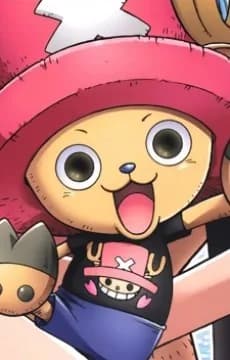
Tony Tony Chopper
One Piece universe
Tony Tony Chopper makes a medical role feel unexpectedly intimate: watching him care for somebody puts the show’s enormous, noisy adventure briefly at the scale of one worried patient. He is a physician and a pirate, and that pairing gives even his lighter moments a small tug of conscience. The comedy can be broad, but the feeling underneath it is plain: he wants to be useful, and being needed matters to him.
By Mika Tanabe
Appearance
Chopper is designed to register quickly, with a silhouette and expressions that make his reactions easy to read amid the busy visual traffic of One Piece. That clarity is a real viewing pleasure. A glance can carry embarrassment, delight, or alarm before anyone has to explain the mood, and the show knows when to let that reaction land. His look also invites the audience to underestimate how seriously he takes his work. The contrast is funny without making his care seem like a joke.
Personality
His open enthusiasm is easy to enjoy, though I like him best when the show lets his earnestness become a little awkward. Praise can send him into a fluster, and his attempts to look composed have their own comic rhythm. Under that, there is a strong sense of responsibility. A physician cannot treat another person’s fear as background noise, and Chopper brings that attention into a series that often runs at a sprint. He can be silly without becoming careless. That distinction keeps him lovable after the first cute impression has worn off.
Tony Tony Chopper’s Story
Spoiler-free introduction
Early on, Chopper is introduced through the tension between his eagerness to help and his uncertainty about how others will respond to him. The show lets his medical purpose come through in practical moments of care, then gives him room to be excitable and ridiculous around the people he meets. Those shifts are the key to watching him. His sweetness is not a decorative pause from the adventure; it is part of how he approaches people, even when he is unsure of himself. You do not need a catalogue of his skills to understand the appeal. Pay attention to how quickly concern takes over when someone needs help, and how much it means when that help is welcomed. His early scenes establish a warm comic presence with a sincere center, without asking the viewer to choose between laughing at him and taking him seriously.
Spoilers beyond Chopper’s early introduction
As the story gives Chopper more room, his commitment to medicine becomes a way to read his growth. He is not interesting because every scene announces a new milestone; the satisfying change is quieter, in how his wish to help holds up when the people around him make that difficult. His comic vulnerability remains part of the character rather than something the series needs to erase. That balance matters. Chopper can be frightened or overeager and still be the person a viewer trusts to take suffering seriously. Later material asks the audience to sit with the emotional cost of caring, not just cheer for competence. It deepens the first impression without replacing it: the little bursts of pride and embarrassment still belong to someone whose attention keeps returning to other people’s wellbeing.
Abilities
Chopper’s medical knowledge gives his scenes a distinct kind of action. He is a physician, so noticing distress and responding with care can matter as much as a forceful move in a fight. One Piece is action-shaped, and he belongs in that energy, but the most revealing measure of his usefulness is often whether he can help someone who needs him. His work also gives the audience a reason to watch his reactions closely: worry is not just an expression for him, it is a cue that he has recognized a need. The series can move from a gag to danger quickly, and Chopper’s medical role makes that change feel personal.
Watch Tony Tony Chopper’s Story
Start with One Piece (1999). Chopper is a character who rewards watching for the small changes in a scene: a joke gives way to concern, then his attention settles on the person who needs care. That rhythm is a good introduction to what he brings to the larger adventure. The page’s availability panel has the legal services for each appearance, so you can use it to choose where to begin without guessing from a search result. If you are deciding whether to commit, give his early material enough time to show both sides of him. The humor is broad, but the warmth is earned through how seriously he treats other people’s needs.
Start here: One Piece (1999) — on Crunchyroll, Hoopla, Hulu, Netflix
- One PieceMain · 1999Crunchyroll, Hoopla, Hulu, Netflix
- One Piece Film: Strong WorldMain · 2009Amazon Prime Video, Crunchyroll
- One Piece Film: ZMain · 2012Amazon Prime Video, Crunchyroll, Netflix
- One Piece Film: GoldMain · 2016Crunchyroll, Max
- One Piece: StampedeMain · 2019Crunchyroll
- One Piece Film: RedSupporting · 2022Crunchyroll, Netflix
Questions
- How tall is Tony Tony Chopper?
- His height is not needed to get a feel for him on screen. Watch how clearly his expressions carry a scene, especially when his confidence gives way to concern.
- Who voices Tony Tony Chopper in English?
- Brina Palencia is Chopper’s English voice actor. The performance gives his excitement a bright comic edge while keeping his more sincere moments easy to believe.
- When does Tony Tony Chopper first appear?
- Start with One Piece (1999), where his early introduction establishes his medical purpose and eager temperament. I would avoid looking up episode-by-episode summaries if you want those first impressions to arrive naturally.
- Where can I watch Tony Tony Chopper?
- Begin with One Piece (1999), then use the availability panel on this page to see the legal services for that appearance. It also covers his film appearances, so you can check each title before choosing what to play.
- Is Tony Tony Chopper worth watching for?
- Yes, especially if you like a comic character whose kindness feels active rather than ornamental. Chopper’s mixture of medical seriousness and easily rattled enthusiasm gives the show some of its gentler, more human pauses.