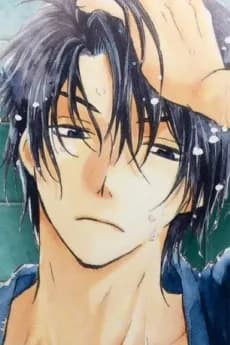
Son Hak
Yona of the Dawn universe
Son Hak makes a particular kind of promise to the viewer: if the story turns frightening, he will be the person whose attention does not wander. In Yona of the Dawn, that steadiness gives scenes a pulse of their own. He can be funny without turning into comic relief, and his confidence has an edge that keeps it from feeling like effortless cool. The nickname Thunder Beast carries a louder reputation, but the pleasure of watching him comes from the calm that sits beneath it. Tomoaki Maeno gives that calm a firm, unhurried sound, while Christopher Sabat brings a weightier grain to the English performance. Neither voice needs to announce Hak's importance. They make his presence felt through timing, especially when a pause says more than another showy line could.
By Mika Tanabe
Appearance
Hak's visual impression is built around directness. The design reads clearly in motion, which matters in a series where a character's stance can carry as much attitude as a line of dialogue. He has the kind of screen presence that catches the eye without making every frame feel like a poster pose. That distinction keeps his confidence human. The visual language lets him look at ease, then lets the performance shift the feeling of that ease when a scene asks for more attention. It is a restrained way to make a memorable character: the outline is easy to recognize, but the face and posture still have room to change with the moment. His look does not need a parade of details to stay in the mind. What sticks is the impression of someone ready to act, with enough looseness in his bearing to keep that readiness from becoming stiff.
Personality
Hak is enjoyable because certainty does not flatten him. He can carry himself like someone who expects to manage whatever is in front of him, yet the show leaves enough wit in his delivery to keep that self-assurance from becoming pompous. The humor is dry, with a teasing streak that feels like part of his ordinary rhythm rather than a pause for a punchline. Then a scene tightens, and that easy rhythm becomes focus. The shift is satisfying because the show does not need to explain it; the change in attention does the work. I read him as a character whose reliability is most convincing when it looks almost casual. He does not need to pose as noble to earn the viewer's trust. Maeno and Sabat both find ways to preserve the dry humor while letting the serious moments land, though their vocal textures give Hak different kinds of warmth. His confidence is fun to watch, but the small signs of care are what make it matter.
Son Hak’s Story
Spoiler-free introduction
Early on, Hak gives the series a grounded center. He is confident, quick with a dry remark, and easy to read as capable, but his appeal is not limited to competence. Watch how readily he notices the mood around him and how naturally humor can soften a tense exchange. Those small shifts establish a character who feels present even when he is not driving the conversation. The show lets his composure speak before it asks for a grand statement, and that makes the early scenes inviting. You can enjoy the spark of his banter while also sensing that he takes the people around him seriously. This is a useful place to begin if you want to know whether his screen presence works for you: the promise is in the way he combines ease with attention.
Spoilers beyond the early story
As the story continues, Hak's steadiness becomes more interesting because it has to keep earning its place. The series gives that familiar confidence new emotional pressure, so a gesture or a change in tone can carry the force of a longer explanation. I would avoid reducing that development to a simple claim that he is always strong. The more rewarding watch is noticing what his steadiness costs him in a given moment, and how the performance lets affection, restraint, and frustration share the same scene. The later material asks the audience to keep revising its sense of what his composure means. That evolving texture is the reason I would keep watching beyond the first impression.
Watch Son Hak’s Story
Start with Yona of the Dawn (2014), the story that gives Hak room to be funny, formidable, and quietly affecting. Crunchyroll and Hulu are the places to watch it. His scenes work best when you give the quieter exchanges the same attention as the high-energy ones: the comedy is part of his character, and the pauses often shape how the next beat lands. Go in for the confident presence if that is what catches you, then stay for the care beneath it. The series is a good fit for viewers who like an action story with personality in its conversations, and Hak is one of the reasons those conversations have a distinctive rhythm.
Start here: Yona of the Dawn (2014) — on Crunchyroll, Hulu
- Yona of the DawnMain · 2014Crunchyroll, Hulu
Questions
- Who voices Son Hak in English?
- Christopher Sabat voices Son Hak in English. His performance gives the character a grounded, weighty sound while keeping the dry humor clear.
- Who is Son Hak's Japanese voice actor?
- Tomoaki Maeno voices Son Hak in Japanese. His measured delivery suits the character's calm confidence and quick wit.
- When is Son Hak's birthday?
- Son Hak's birthday is August 9. The date fits neatly beside the more memorable impression he leaves on screen: an assured presence with a teasing streak.
- Where can I watch Son Hak's story?
- Son Hak appears in Yona of the Dawn (2014), which is available on Crunchyroll and Hulu. Start with that series to follow his story.
- Is Son Hak worth watching for?
- Yes, especially if you enjoy a character whose humor and composure can share the same scene. Hak gives the series a steady presence, and the voice performances make his dry wit part of the appeal.