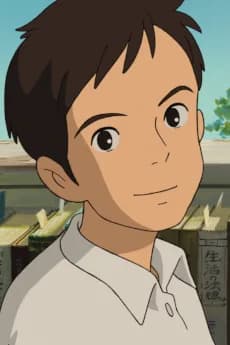
Shun Kazama
From Up on Poppy Hill universe
Shun Kazama gives From Up on Poppy Hill a particular kind of quiet to listen for: the pause before someone decides whether to speak plainly. Watching him, I’m drawn to the effort behind his composure, because stillness here can feel like a choice with consequences rather than a blank stretch between louder moments. He makes attention itself part of the viewing experience.
By Mika Tanabe
Appearance
Shun’s screen presence reads as composed, with a firmness that keeps his quiet moments from seeming vacant. The pleasure is in watching small shifts register: a held look, a measured response, the sense that he is weighing what a moment asks of him. This is not a character whose appeal depends on a parade of dramatic gestures. His restraint gives the film room to let a conversation carry its own pressure, and it rewards a viewer who notices how tone changes when he is listening.
Personality
There is a serious streak to Shun, but seriousness does not make him remote. He gives the impression of someone who wants his words to count, which makes even a simple exchange feel considered. I find that quality more affecting than polished charm. He can hold back without turning that reserve into a performance of mystery, and the distinction matters: the viewer is not asked to admire a pose, but to sit with the uncertainty of what someone may be choosing to say. His presence encourages patience, especially in a film where emotional attention matters as much as forward motion.
Shun Kazama’s Story
Spoiler-free introduction
Early on, the film establishes Shun through the way he carries himself around other people. His calm can make a first impression feel settled, though there is enough care in his responses to keep that impression open to question. You do not need advance knowledge to follow him; the interest is in noticing how he listens, what he chooses to make clear, and how much feeling can sit behind an even manner. Keep your attention on the exchanges themselves. Shun’s story is easiest to meet without trying to turn every quiet beat into a clue.
Spoilers beyond the opening
As the story develops, Shun’s reserve becomes a useful measure of how much trust a moment can bear. The film asks you to reconsider the confidence of a first impression, then gives his quieter choices more emotional weight. That shift is best experienced in sequence, because explaining the later context would take away some of the uncertainty that makes his scenes affecting. Watch for the difference between being composed and feeling untouched; Shun’s stillness is not a promise that everything around him is simple.
Watch Shun Kazama’s Story
Start with From Up on Poppy Hill, the film where Shun’s manner has space to register without needing an introduction from another story. It is available on Max and Netflix. Give the conversations your attention, especially the pauses and the way he responds to other people. If you come looking for a character who announces every feeling, his restraint may seem understated at first; stay with it, and that understatement becomes the reason to keep watching.
Start here: From Up on Poppy Hill (2011) — on Max, Netflix
- From Up on Poppy HillMain · 2011Max, Netflix
Questions
- Who voices Shun Kazama in English?
- Anton Yelchin voices Shun Kazama in English. The performance suits a character whose presence often depends on controlled, thoughtful delivery.
- Who is Shun Kazama's Japanese voice actor?
- Junichi Okada voices Shun Kazama in Japanese. His role gives the character a composed presence that fits the film’s quieter exchanges.
- When does Shun Kazama first appear?
- Shun Kazama appears in From Up on Poppy Hill (2011). The film is the place to begin following his story.
- Where can I watch Shun Kazama?
- From Up on Poppy Hill (2011), featuring Shun Kazama, is available on Max and Netflix. Either service lets you follow his story in the film.
- Is Shun Kazama worth watching for?
- Yes, especially if you enjoy performances that let quiet attention carry emotional weight. Shun’s measured manner gives the film’s conversations a texture worth settling into.
Spoilers: tap to reveal
- Family
- Hiroshi Tachibana