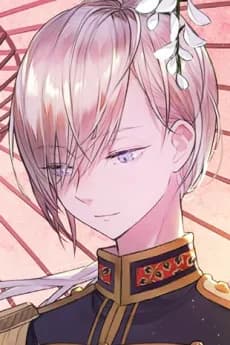
Kiyoka Kudo
My Happy Marriage universe
Kiyoka Kudo's first impression is all command: a man whose work has taught him to keep his reactions under lock. Watching him means waiting for the lock to shift. The pleasure is in the small change of pressure, a pause that lasts a fraction longer, a reply softened by the fact that he chose to give it. He does not ask the audience to find him charming. He asks us to notice what restraint costs when it becomes a habit, and the series is strongest when it lets that effort register without announcing it.
By Mika Tanabe
Appearance
Kiyoka's presentation makes composure part of his character before he has to explain himself. Kaito Ishikawa's Japanese performance gives that composure a firm edge, with a measured delivery that can keep even a simple exchange at arm's length. The English performance by Damien Haas finds a different route to the same guardedness: the voice stays controlled, but its shifts make consideration audible. Neither reading needs to turn him into a stone wall. The difference between a response held back and a response freely offered is where the attention goes. If you watch dubbed, listen for how that control eases; in Japanese, notice how much feeling Ishikawa can leave just beneath the words. Both choices make quiet scenes active. You are listening for a decision, not waiting for the next speech to explain one.
Personality
His authority can look severe, and the show gets mileage from refusing to make severity his whole personality. Kiyoka is disciplined enough that courtesy feels like a choice rather than a social reflex. That gives his gentler moments weight: they are not proof that the stern first impression was false, but evidence that he can decide how to treat someone even while carrying the habits of command. I find that tension more persuasive than a sudden transformation into an openly sentimental lead. His reserve also asks something of the viewer. It is easy to mistake quiet for emptiness, especially when a story could rush in to translate every expression. Kiyoka rewards patience because the performance lets attention do some of the work. Watch the timing of his answers and the care behind an ordinary act; those details make his warmth feel earned. There is a satisfying steadiness to him, too. He does not need to dominate every exchange for his presence to register, and his restraint keeps the emotional rhythm from becoming sugary. When the story gives him space to respond instead of simply issue an order, the shift lands precisely because he has not been performing softness all along.
Kiyoka Kudo’s Story
Spoiler-free introduction
At the start of My Happy Marriage, Kiyoka is introduced through the authority of his position as a commanding officer and through the distance that authority creates. The early appeal lies in watching him decide how much of himself to show in each interaction. There is no need to know what comes later to understand the basic pleasure: the sternness is legible, but so is the possibility of care beneath it. The series invites you to read the difference between duty and personal attention at a human scale. A formal manner can make kindness difficult to recognize, and Kiyoka's measured responses ask the viewer to stay with a moment long enough to tell which one is taking shape. This is a safe place to begin if you want the character's initial impression without later turns. Pay attention to what he chooses to do with his authority, and to how carefully the show lets first impressions settle before asking you to revise them. The story's quietness gives those choices room to matter. It does not require Kiyoka to explain every feeling aloud for the audience to understand that a response has changed. His reserve can be frustrating if you want every emotion labeled immediately, but it also gives small acts a clean, satisfying impact. Begin with the first series and let its early portrait establish the terms; the later material is best approached after that foundation has had time to work.
Spoilers beyond the early story
Beyond the opening portrait, Kiyoka's story becomes a longer test of whether his instinct for control can make room for closeness. The useful question is not whether he can discard discipline, but whether discipline can serve another person instead of keeping every feeling safely contained. That distinction gives his development a believable pace. He does not become compelling by ceasing to be himself; the interest comes from seeing the same seriousness applied with a more personal stake. Later material also benefits from the viewer already knowing how much his smallest concessions can mean. A character who begins with a wide gap between public manner and private response has to change by degrees for the change to feel true, and Kiyoka's measured quality gives those degrees a clear shape. His role as an officer remains part of how he sees the world, while emotional attention asks him to make choices that cannot be handled by command alone. The second season is a continuation of that invitation to read him closely. Go into it after the first series if you want to see the fuller arc without having its later emotional turns flatten the first impression. The reward is not a string of surprises for their own sake. It is the accumulated sense that care can become visible through conduct, especially from someone who was not inclined to make a show of it.
Watch Kiyoka Kudo’s Story
For Kiyoka's story, start with My Happy Marriage (2023), then continue with My Happy Marriage Season 2 (2025). Both are available on Netflix. The first series is the right entry point because it lets you meet his controlled manner before the later continuation builds on it. If you are choosing a language, the Japanese performance is by Kaito Ishikawa and the English performance is by Damien Haas. I would give the early episodes room to establish their pace rather than expecting Kiyoka to declare every feeling as soon as he has it. His appeal depends on the viewer catching the care in the choices he does make. That quiet attention is the reason to keep watching, and it makes the gradual emotional movement more satisfying than a quick explanation would be.
Start here: My Happy Marriage (2023) — on Netflix
- My Happy MarriageMain · 2023Netflix
- My Happy Marriage Season 2Main · 2025Netflix
Questions
- Who voices Kiyoka Kudo in English?
- Damien Haas voices Kiyoka in the English version of My Happy Marriage. His controlled delivery keeps the character's authority intact while letting moments of consideration come through.
- Who is Kiyoka Kudo's Japanese voice actor?
- Kaito Ishikawa voices Kiyoka in Japanese. His measured performance makes the character's restraint feel deliberate, with feeling held close to the surface.
- When does Kiyoka Kudo first appear?
- Kiyoka first appears in My Happy Marriage (2023), where the series establishes his commanding presence and reserved manner. Start there before moving on to My Happy Marriage Season 2 (2025).
- Where can I watch Kiyoka Kudo's story?
- My Happy Marriage (2023) and My Happy Marriage Season 2 (2025) stream on Netflix. Begin with the 2023 series, then continue with Season 2.
- Is Kiyoka Kudo worth watching for?
- Yes, if you enjoy a reserved character whose care shows through deliberate choices and small shifts in manner. The series gives his emotional movement time to register instead of making him explain everything outright.