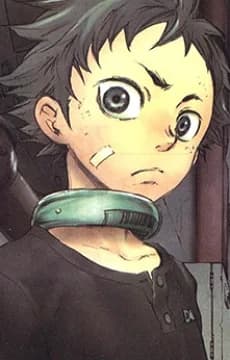
Ganta Igarashi
Deadman Wonderland universe
Ganta Igarashi gives Deadman Wonderland an unusually exposed point of view: the viewer has to sit with a teenager whose reactions feel immediate, unpolished, and hard to hide. The tension around him lands through that openness. He does not come across as a polished action lead with a ready answer for every shock; the appeal is watching his fear and resolve occupy the same face without either one becoming a performance.
By Mika Tanabe
Appearance
Ganta's design reads clearly on screen, with an expressive face that lets small shifts register before he says much. That clarity suits the show's harsh mood. A tightened expression or a pause can make him look younger and more vulnerable, while a firmer look gives the scene a thread of resistance to hold onto. The visual impression is direct rather than ornate, which keeps attention on his response to what is happening around him. His presence never asks the viewer to admire him from a distance. It asks for a closer kind of attention, the sort that catches hesitation as readily as determination.
Personality
There is a rawness to Ganta that makes him easy to read and difficult to dismiss. He reacts strongly, and the series lets those reactions stay visible instead of smoothing them into a cool hero pose. That can make watching him uncomfortable in a productive way: his distress has weight, and his attempts to steady himself do not erase it. His youth matters in the emotional texture of the performance, not as a number to recite. He feels like someone still learning how to carry pressure while the pressure is already present. I find that friction more convincing than effortless bravery. The character can be frightened and still keep moving toward the next thing he has to face, which gives his courage a human scale.
Ganta Igarashi’s Story
Spoiler-free introduction
Early on, Ganta is the viewer's close point of contact with a story built to feel disorienting and severe. His reactions help establish the emotional terms: shocks are allowed to affect him, and the show does not ask the audience to pretend that fear disappears because the next scene needs momentum. That makes his perspective an effective way into the series. The central pleasure is not comfort; it is the intimacy of staying near a young character who has to process each moment as it comes. This entry stays with that early impression and avoids later developments.
Spoilers beyond the early story
As the story continues, Ganta's role becomes more interesting when viewed through the gap between what he feels and what he can make himself do. The show keeps his emotional openness in view, so strength does not arrive as a sudden change of personality. It accumulates through pressure, setbacks, and the choices he can bear to make. That progression gives his scenes a particular charge: resolve feels earned because vulnerability remains part of the picture. His connections to Scar Chain and the Infiltration Team add a different kind of strain to that reading, placing his personal reactions beside commitments that ask something of him. The result is a character arc shaped by endurance, with each shift asking the viewer to reconsider what staying upright costs him.
Abilities
Deadman Wonderland is action-shaped, but Ganta is compelling to watch because action does not turn him into an untouchable figure. The scenes involving his capabilities carry emotional pressure alongside physical danger, and his reactions remain part of the experience. That keeps the action connected to character: a clash is not just a burst of movement, but another moment in which he has to meet fear and decide what to do with it. The show benefits from giving the viewer someone whose limits feel present even when the pace accelerates. His fighting presence has urgency because it belongs to a person still visibly affected by what he faces.
Relationships
- Sorae Igarashi
- The connection to Sorae gives Ganta's story a personal point of reference outside the strain of the present. It matters because his emotional life does not begin and end with the immediate danger around him. The family bond helps keep his vulnerability legible without turning every scene into an explanation of his feelings.
- Scar Chain
- Ganta's place in Scar Chain gives his resolve a social context. Watching him alongside that affiliation adds pressure to his choices, since his actions carry meaning beyond his private response to events. The story gains texture when his need to endure meets the demands of belonging.
Watch Ganta Igarashi’s Story
Deadman Wonderland is the place to start for Ganta Igarashi, and Crunchyroll is the service listed for watching it. The series is severe in tone, so Ganta's open, unsettled point of view shapes the experience from the start. Watch for the way the show lets fear remain visible while still giving him room to act. That balance is what makes him worth following: he does not need to look invulnerable for a moment to feel consequential. The English performance by Greg Ayres and the Japanese performance by Romi Park both give the character a distinct voice, so either version offers a clear route into his story.
Start here: Deadman Wonderland (2011) — on Crunchyroll
- Deadman WonderlandMain · 2011Crunchyroll
Questions
- Who voices Ganta Igarashi in English?
- Greg Ayres is Ganta Igarashi's English voice actor. Romi Park voices him in Japanese. Both performances keep his reactions immediate and easy to follow.
- When does Ganta Igarashi first appear?
- Ganta first appears in Deadman Wonderland. Start with the 2011 series to follow his story from its beginning.
- Where can I watch Ganta Igarashi?
- Ganta's story appears in Deadman Wonderland (2011), which streams on Crunchyroll. That is the place to start.
- Is Ganta Igarashi worth watching for?
- Yes, especially if you like leads whose fear stays visible alongside their determination. Ganta gives the show's intense action an emotional point of view instead of making every scene about looking fearless.